

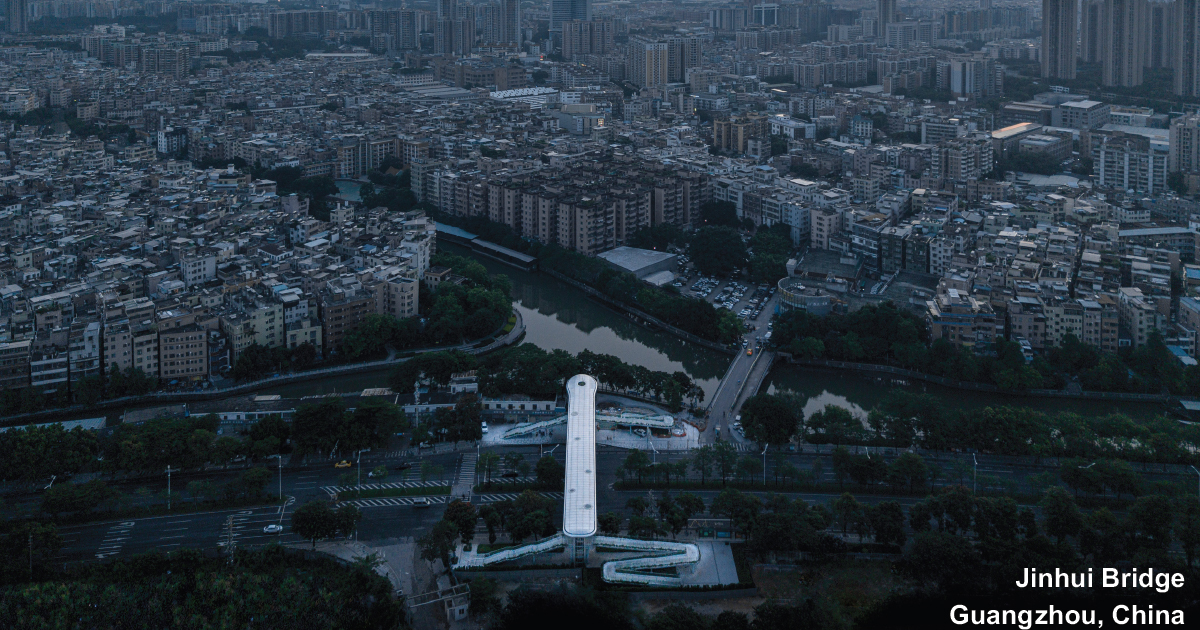
Jinhui Bridge, Guangzhou, China | Design Company:Architectural Design & Research Institute of South China University of Technology Co., Ltd. ; Zoomtech Engineering Co., Ltd. ; Client:Guangzhou Tianhe District Proxy Construction Bureau ; Construction Company: China Gezhouba Group Road and Bridge Engineering Co., Ltd. | World Design Awards 2025
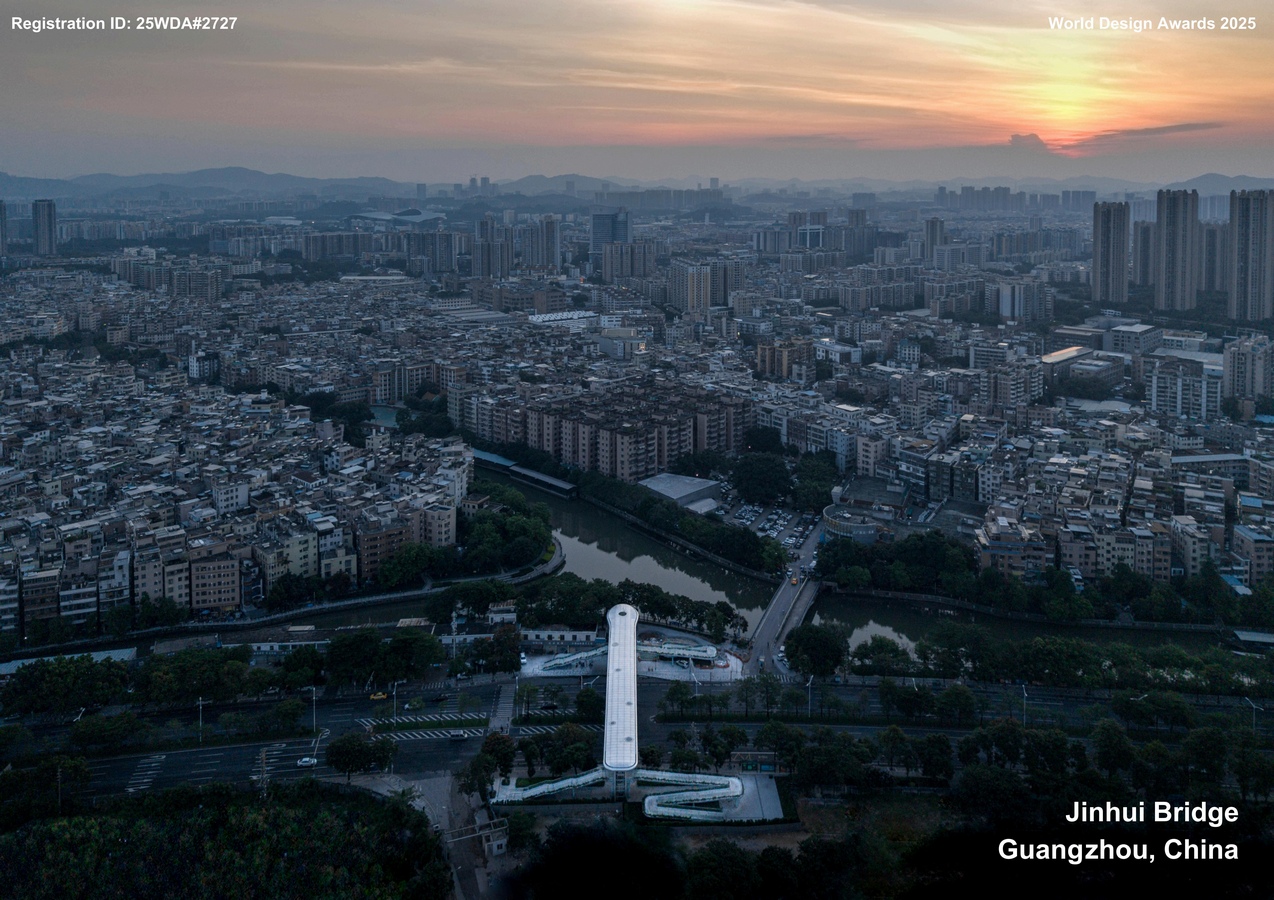
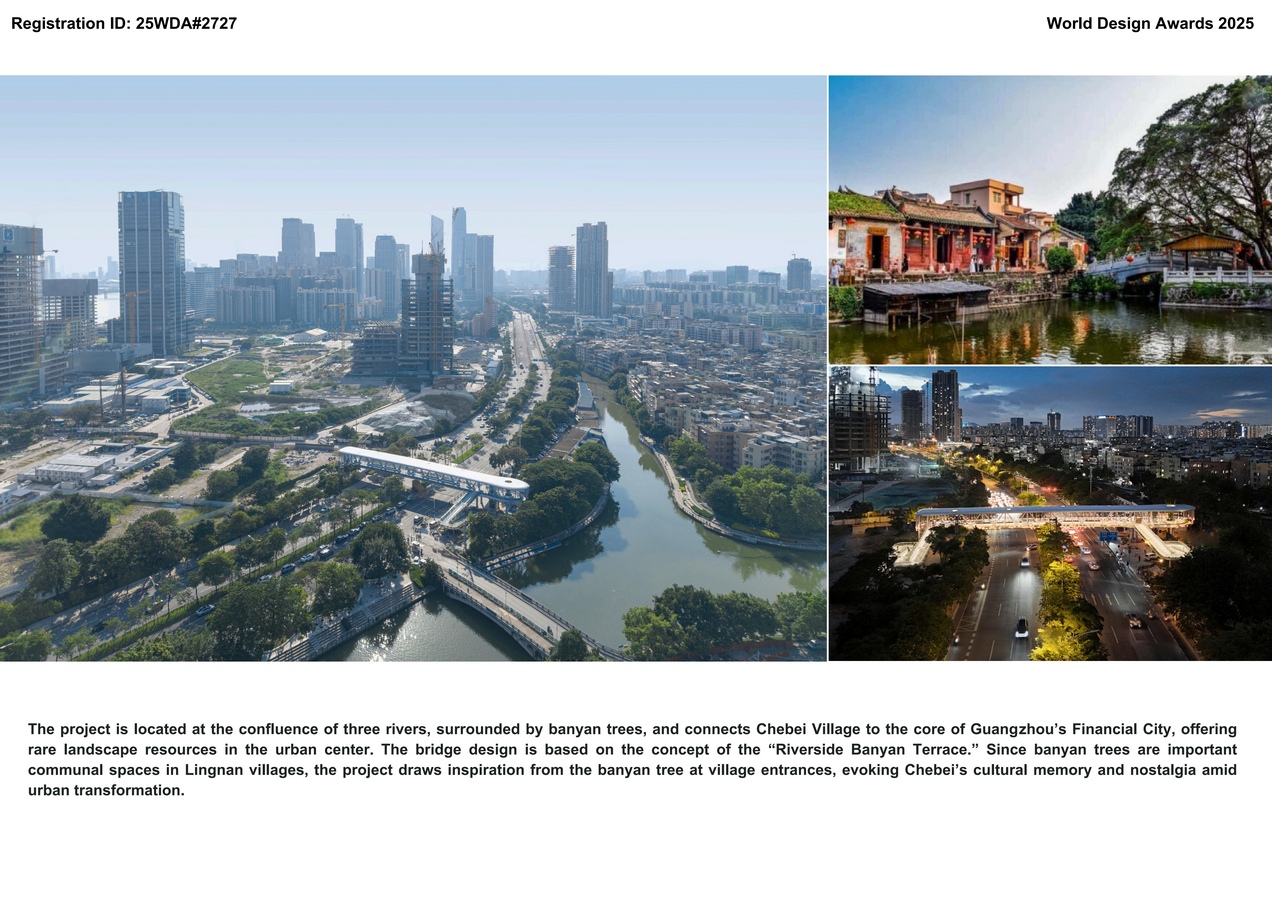
Design Company:Architectural Design & Research Institute of South China University of Technology Co., Ltd. ; Zoomtech Engineering Co., Ltd. ; Client:Guangzhou Tianhe District Proxy Construction Bureau ; Construction Company: China Gezhouba Group Road and Bridge Engineering Co., Ltd.: Winner of World Design Awards 2025. Jinhui Bridge is located at the confluence of three rivers, surrounded by banyan trees, and connects Chebei Village to the core of Guangzhou’s Financial City, offering rare landscape resources in the urban center. The bridge design is based on the concept of the “Riverside Banyan Terrace.” Since banyan trees are important communal spaces in Lingnan villages, the project draws inspiration from the banyan tree at village entrances, evoking Chebei’s cultural memory and nostalgia amid urban transformation.

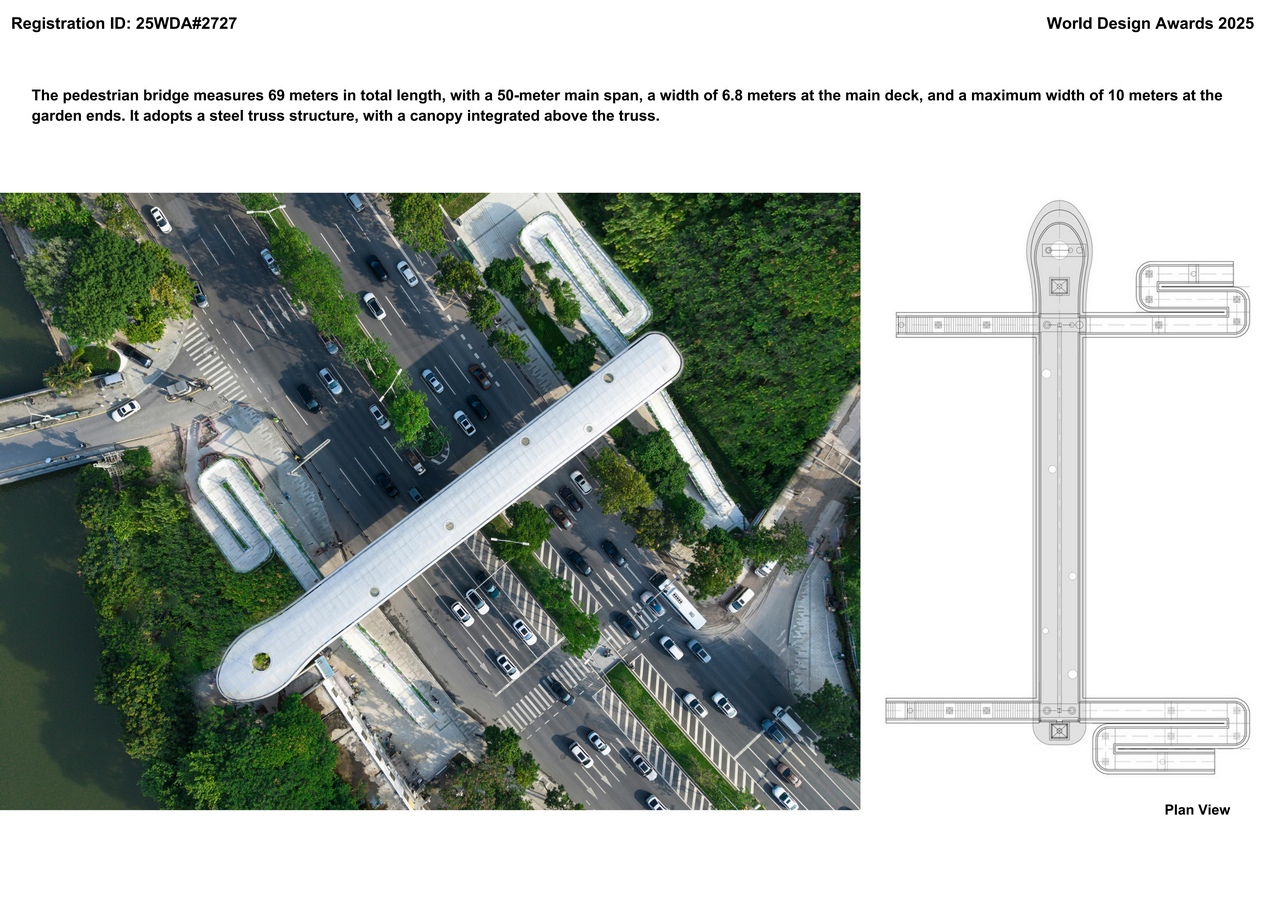
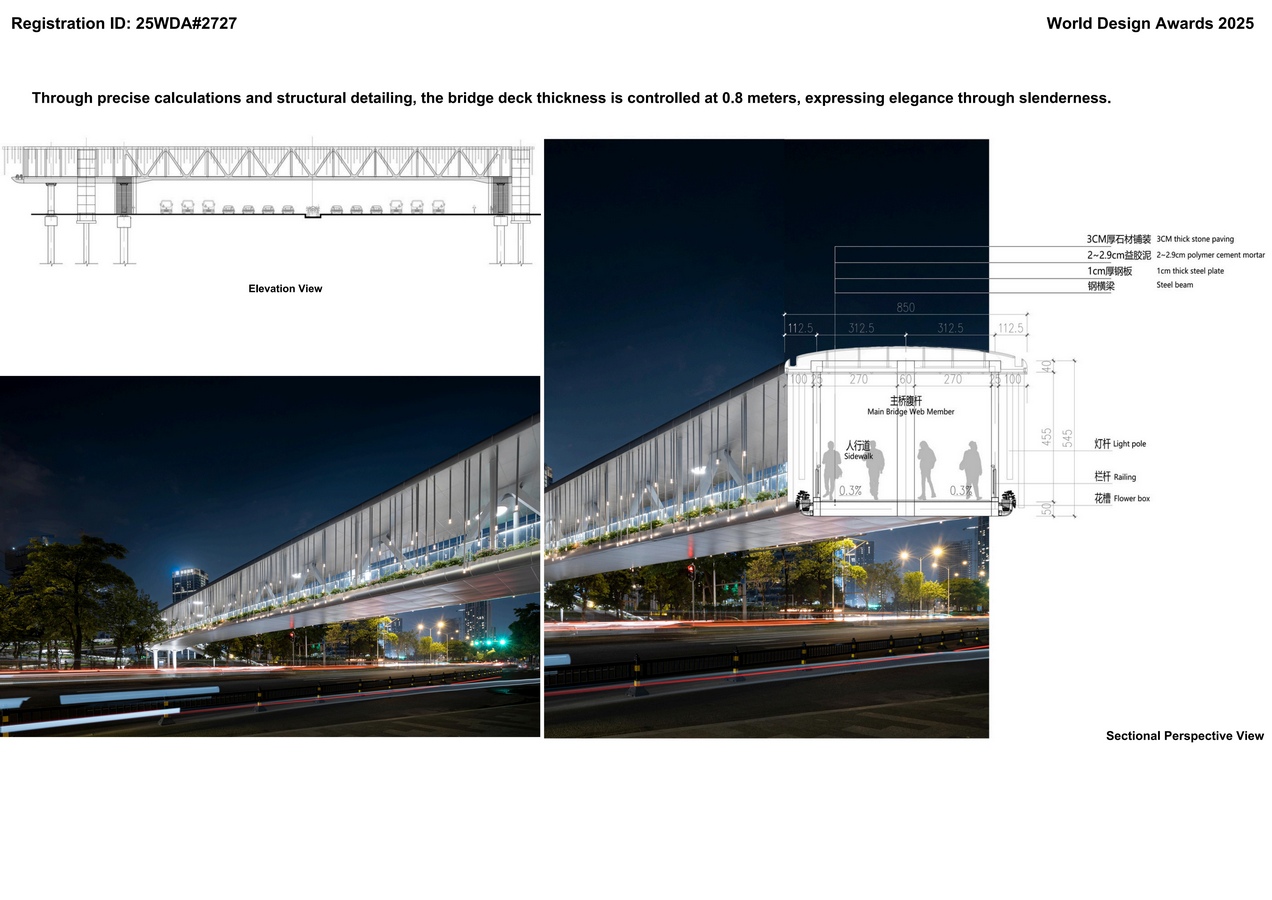
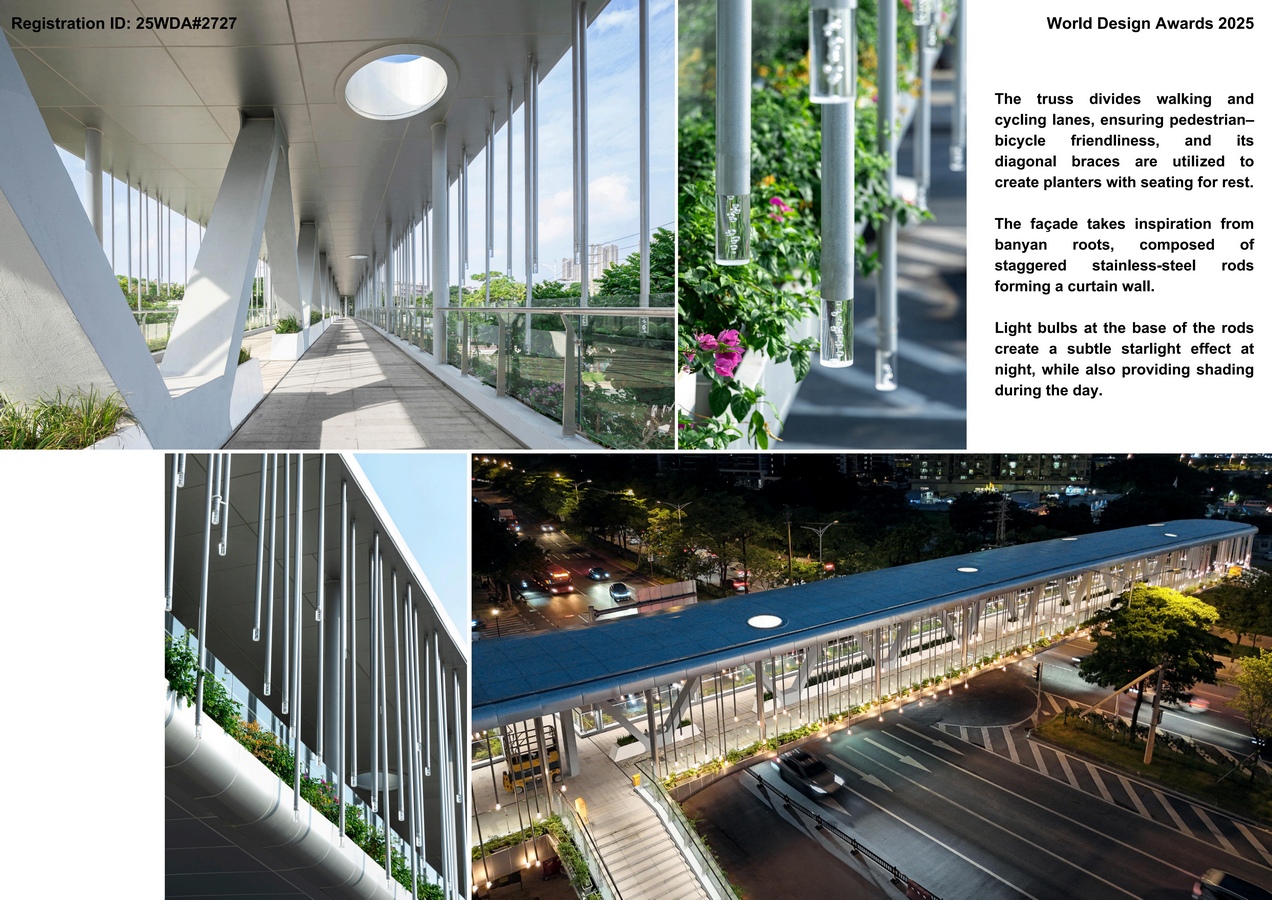
The pedestrian bridge measures 69 meters in total length, with a 50-meter main span, a width of 6.8 meters at the main deck, and a maximum width of 10 meters at the garden ends. It adopts a steel truss structure, with a canopy integrated above the truss. The truss divides walking and cycling lanes, ensuring pedestrian–bicycle friendliness, and its diagonal braces are utilized to create planters with seating for rest. Through precise calculations and structural detailing, the bridge deck thickness is controlled at 0.8 meters, expressing elegance through slenderness.
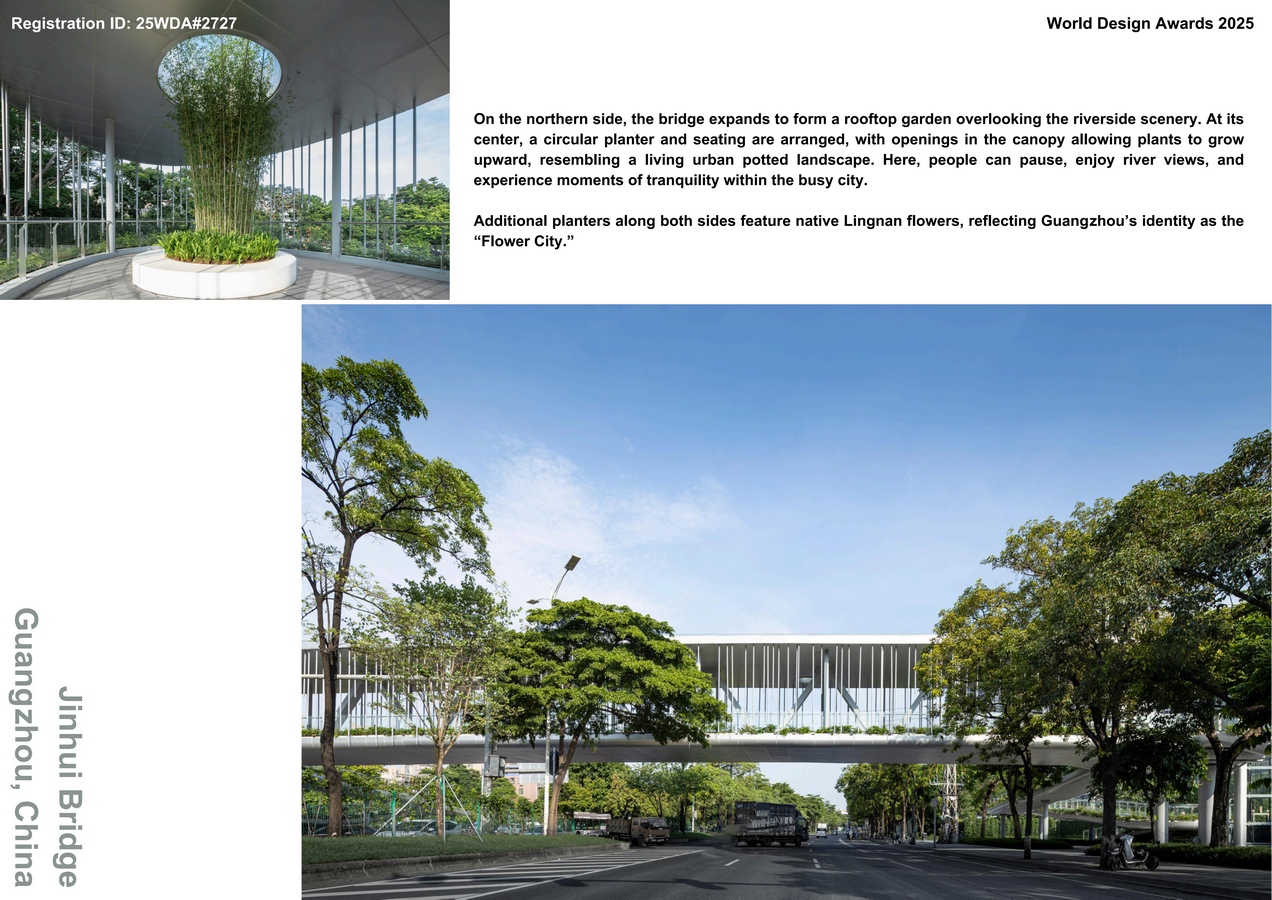
The facade takes inspiration from banyan roots, composed of staggered stainless-steel rods forming a curtain wall. Light bulbs at the base of the rods create a subtle starlight effect at night, while also providing shading during the day. On the northern side, the bridge expands to form a rooftop garden overlooking the riverside scenery. At its center, a circular planter and seating are arranged, with openings in the canopy allowing plants to grow upward, resembling a living urban potted landscape. Here, people can pause, enjoy river views, and experience moments of tranquility within the busy city. Additional planters along both sides feature native Lingnan flowers, reflecting Guangzhou’s identity as the “Flower City.”
Jinhui Bridge is not merely a structure fulfilling the function of connectivity; it is a landscape bridge and an artistic bridge that offers the city a fresh perspective, serving as the “scenic balcony” of the International Financial City. The design aspires to create a multifunctional space that integrates circulation, leisure, and visual enjoyment, while responding to the residential and office functions at both ends, shaping an urban breathing zone in close harmony with nature.

Project Details:-
Firm
Design Company:Architectural Design & Research Institute of South China University of Technology Co., Ltd. ; Zoomtech Engineering Co., Ltd. ; Client:Guangzhou Tianhe District Proxy Construction Bureau ; Construction Company: China Gezhouba Group Road and Bridge Engineering Co., Ltd.
Architect
Pei Zejun, Cao Jianqiang, Liu Lixiong
Project Name
Jinhui Bridge, Guangzhou, China
Project Category
Transportation (Built)
Team
Design team: Gu Zhigang, Lin Zhousheng, Wang Shaohong, He Ruigang, Liu Feng, Guo Taijun, Chen Xiaolong, Lin Jiajue, Liu Jiefeng, Gou Yongping, Jiang Yaohui, Wu Jiasheng
Project Location
Guangzhou, China
Country
China
Photography ©Credit
©Xu Mian

Founded in 1953, the Architectural Design & Research Institute of South China University of Technology Co., Ltd. is a renowned Grade-A architectural design institute in China. Over more than 70 years of development, it has established six major design brands in cultural and exhibition architecture, educational architecture, super high-rise buildings, sports architecture, convention and exhibition architecture, and transportation architecture. It also demonstrates internationally recognized expertise in the field of landscape bridge design, having received globally influential awards such as the Arthur G. Hayden Medal from the International Bridge Conference and the Gold Medal at the World Footbridge Awards.