

Jinmao Palace | Shanghai PTArchitects | Architect of the Year Awards 2025
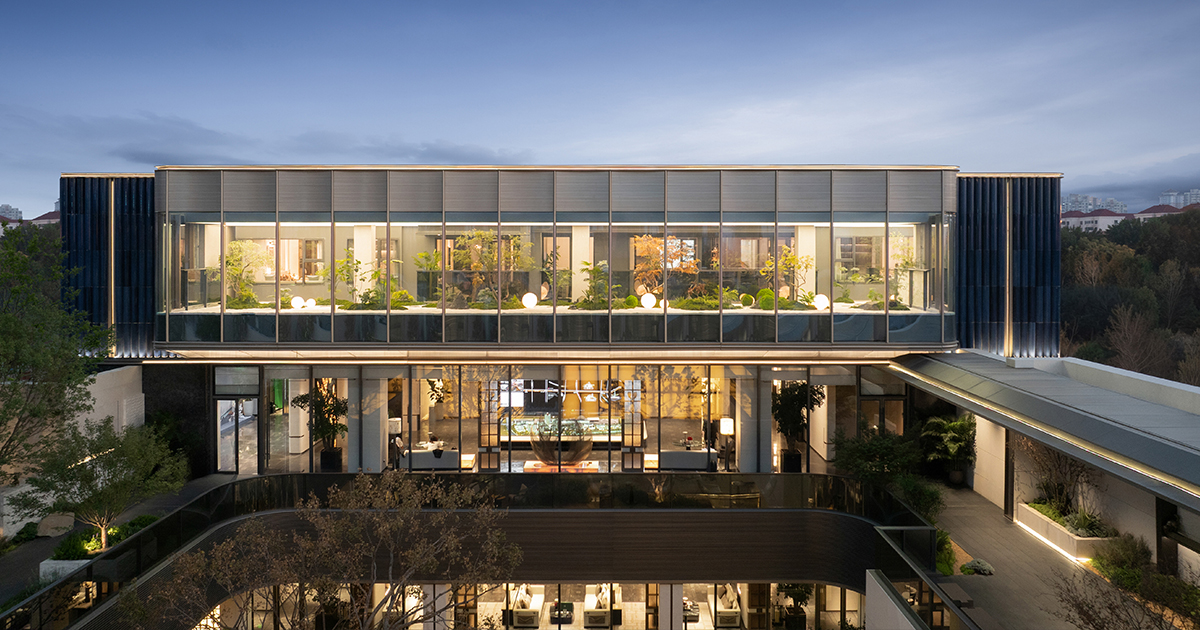
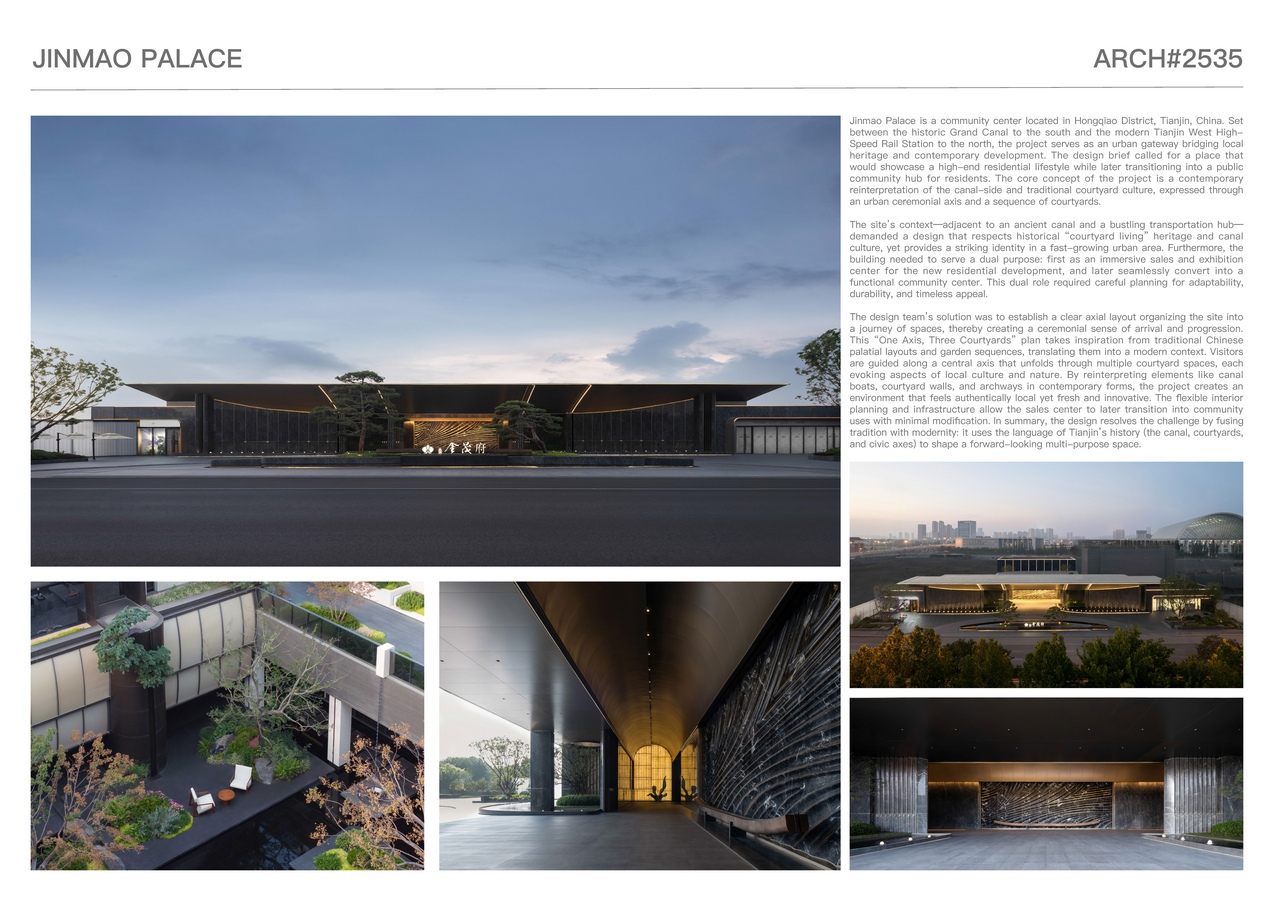
Shanghai PTArchitects: Winner of the Architect of the Year Awards 2025. Jinmao Palace is a residential demonstration area and future community center located in Hongqiao District, Tianjin, China. Set between the historic Grand Canal to the south and the modern Tianjin West High-Speed Rail Station to the north, the project serves as an urban gateway bridging local heritage and contemporary development. The design brief called for a place that would showcase a high-end residential lifestyle while later transitioning into a public community hub for residents. The core concept of the project is a contemporary reinterpretation of the canal-side and traditional courtyard culture, expressed through an urban ceremonial axis and a sequence of courtyards. This concept grounds the project in its cultural context: the Grand Canal’s legacy and Tianjin’s courtyard dwelling traditions are woven into a modern spatial experience. The result is a dignified yet welcoming environment that functions both as a marketing gallery in the short term and a civic-centric community center in the long term, ensuring the development’s continued relevance and sustainability.

Challenge & Solution
The site’s context—adjacent to an ancient canal and a bustling transportation hub—demanded a design that respects historical “courtyard living” heritage and canal culture, yet provides a striking identity in a fast-growing urban area. Furthermore, the building needed to serve a dual purpose: first as an immersive sales and exhibition center for the new residential development, and later seamlessly convert into a functional community center. This dual role required careful planning for adaptability, durability, and timeless appeal.
The design team’s solution was to establish a clear axial layout organizing the site into a journey of spaces, thereby creating a ceremonial sense of arrival and progression. This “One Axis, Three Courtyards” plan takes inspiration from traditional Chinese palatial layouts and garden sequences, translating them into a modern context. Visitors are guided along a central axis that unfolds through multiple courtyard spaces, each evoking aspects of local culture and nature. By reinterpreting elements like canal boats, courtyard walls, and archways in contemporary forms, the project creates an environment that feels authentically local yet fresh and innovative. The flexible interior planning and infrastructure allow the sales center to later transition into community uses with minimal modification. In summary, the design resolves the challenge by fusing tradition with modernity: it uses the language of Tianjin’s history (the canal, courtyards, and civic axes) to shape a forward-looking multi-purpose space.
Spatial Sequence
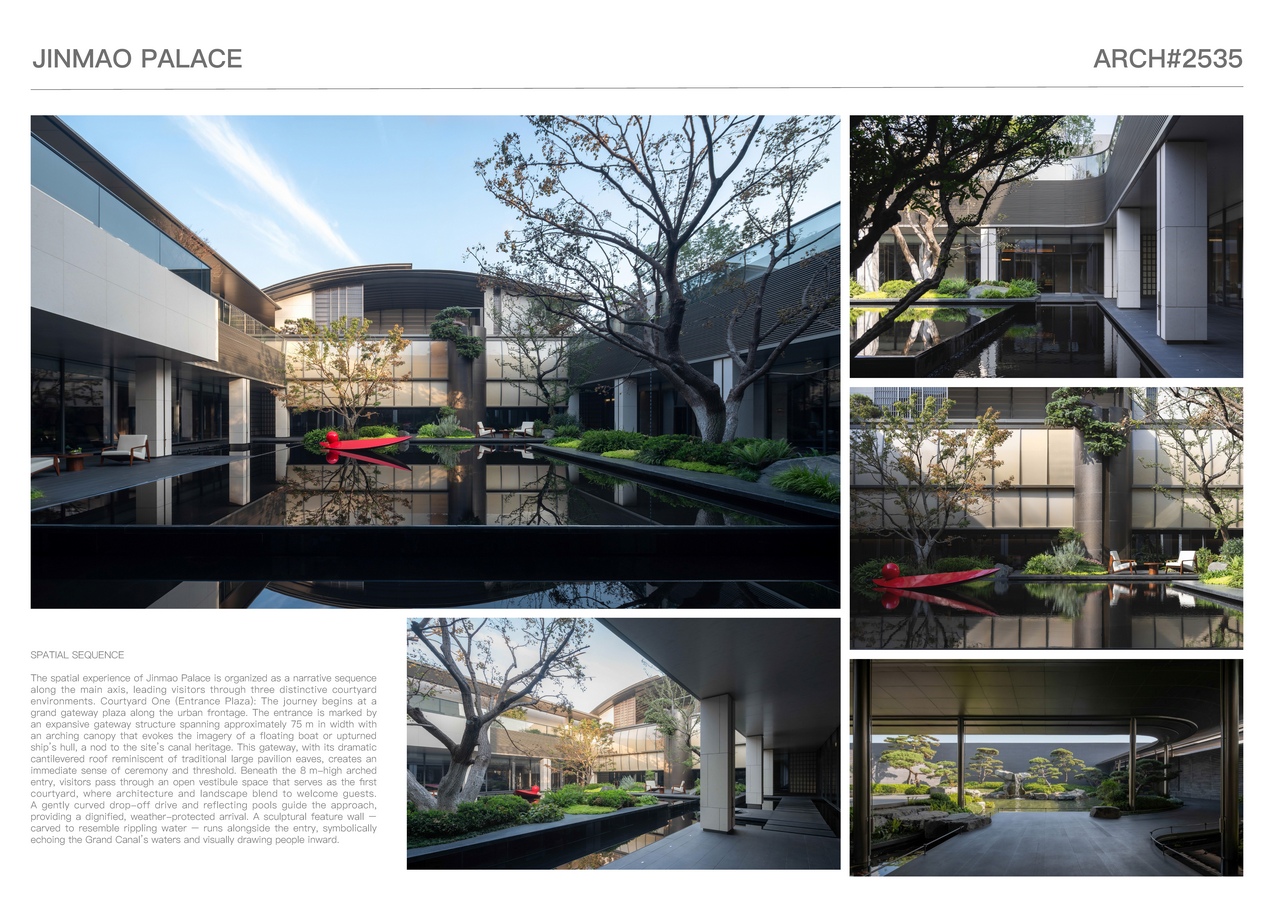
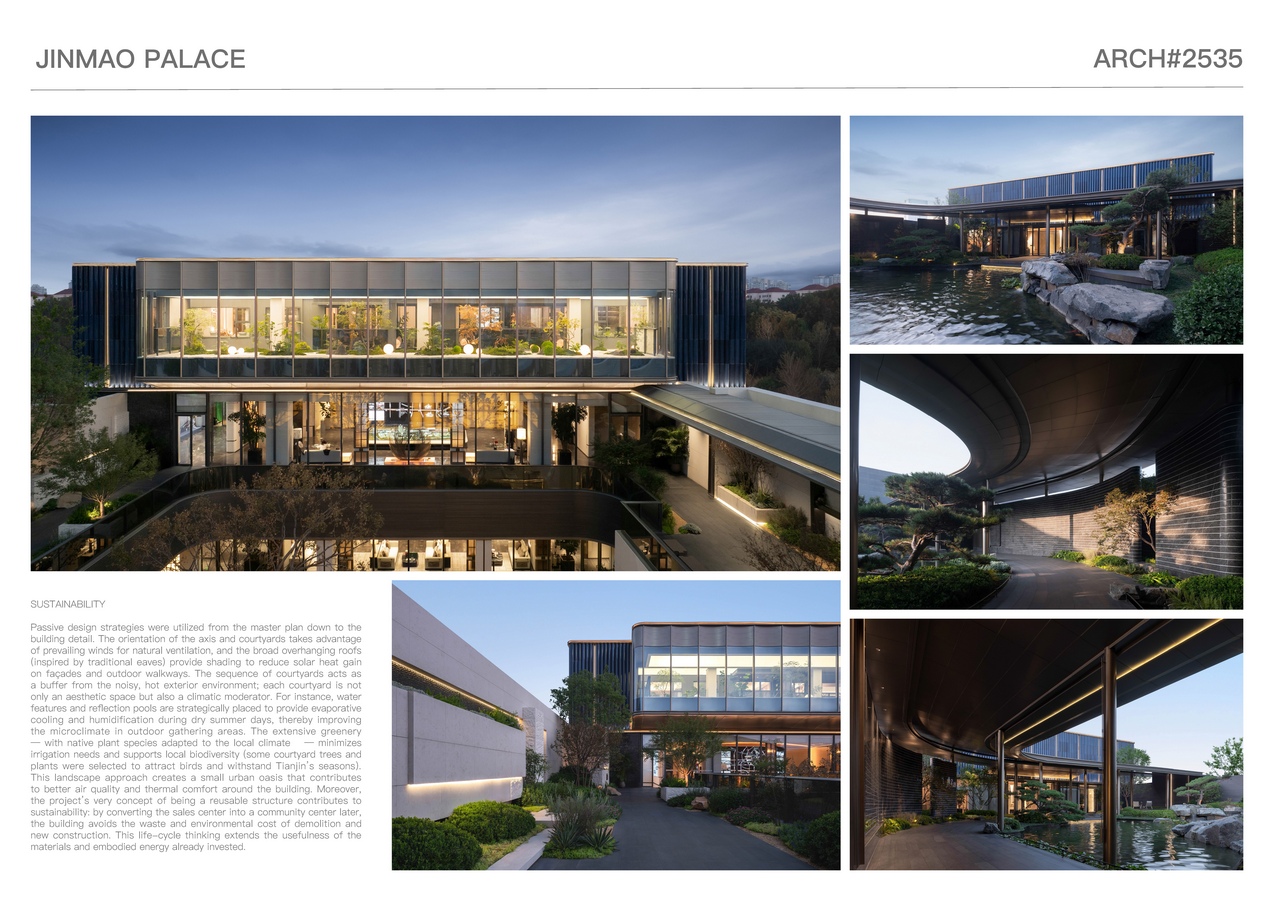
The spatial experience of Jinmao Palace is organized as a narrative sequence along the main axis, leading visitors through three distinctive courtyard environments. Courtyard One (Entrance Plaza): The journey begins at a grand gateway plaza along the urban frontage. The entrance is marked by an expansive gateway structure spanning approximately 75 m in width with an arching canopy that evokes the imagery of a floating boat or upturned ship’s hull, a nod to the site’s canal heritage. This gateway, with its dramatic cantilevered roof reminiscent of traditional large pavilion eaves, creates an immediate sense of ceremony and threshold. Beneath the 8 m-high arched entry, visitors pass through an open vestibule space that serves as the first courtyard, where architecture and landscape blend to welcome guests. A gently curved drop-off drive and reflecting pools guide the approach, providing a dignified, weather-protected arrival. A sculptural feature wall – carved to resemble rippling water – runs alongside the entry, symbolically echoing the Grand Canal’s waters and visually drawing people inward.
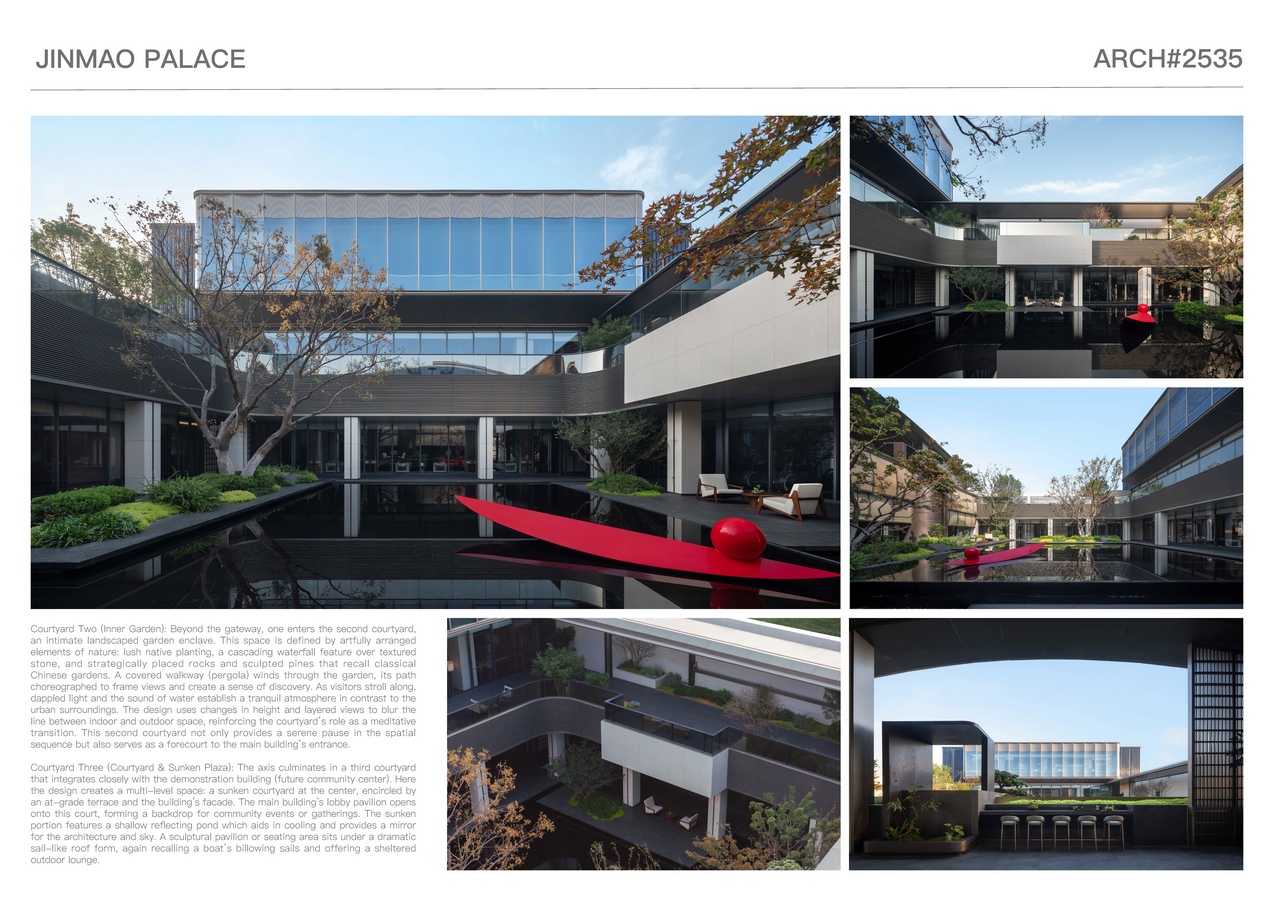
Courtyard Two (Inner Garden): Beyond the gateway, one enters the second courtyard, an intimate landscaped garden enclave. This space is defined by artfully arranged elements of nature: lush native planting, a cascading waterfall feature over textured stone, and strategically placed rocks and sculpted pines that recall classical Chinese gardens. A covered walkway (pergola) winds through the garden, its path choreographed to frame views and create a sense of discovery. As visitors stroll along, dappled light and the sound of water establish a tranquil atmosphere in contrast to the urban surroundings. The design uses changes in height and layered views to blur the line between indoor and outdoor space, reinforcing the courtyard’s role as a meditative transition. This second courtyard not only provides a serene pause in the spatial sequence but also serves as a forecourt to the main building’s entrance.
Courtyard Three (Courtyard & Sunken Plaza): The axis culminates in a third courtyard that integrates closely with the demonstration building (future community center). Here the design creates a multi-level space: a sunken courtyard at the center, encircled by an at-grade terrace and the building’s facade. The main building’s lobby pavilion opens onto this court, forming a backdrop for community events or gatherings. The sunken portion features a shallow reflecting pond which aids in cooling and provides a mirror for the architecture and sky. A sculptural pavilion or seating area sits under a dramatic sail-like roof form, again recalling a boat’s billowing sails and offering a sheltered outdoor lounge.
Overall, this progression from grand civic gateway to inner sanctuary embodies a traditional “entrance–courtyard–inner court” hierarchy translated for modern use, offering visitors and future residents an experience of discovery, orientation, and delight as they move through the site.
Sustainability
Passive design strategies were utilized from the master plan down to the building detail. The orientation of the axis and courtyards takes advantage of prevailing winds for natural ventilation, and the broad overhanging roofs (inspired by traditional eaves) provide shading to reduce solar heat gain on façades and outdoor walkways.
The sequence of courtyards acts as a buffer from the noisy, hot exterior environment; each courtyard is not only an aesthetic space but also a climatic moderator. For instance, water features and reflection pools are strategically placed to provide evaporative cooling and humidification during dry summer days, thereby improving the microclimate in outdoor gathering areas. The extensive greenery — with native plant species adapted to the local climate — minimizes irrigation needs and supports local biodiversity (some courtyard trees and plants were selected to attract birds and withstand Tianjin’s seasons). This landscape approach creates a small urban oasis that contributes to better air quality and thermal comfort around the building. Moreover, the project’s very concept of being a reusable structure contributes to sustainability: by converting the sales center into a community center later, the building avoids the waste and environmental cost of demolition and new construction. This life-cycle thinking extends the usefulness of the materials and embodied energy already invested.

Project Details:-
Firm
Shanghai PTArchitects
Architect
Hu Qiao, Cheng Biao
Project Name
Jinmao Palace
Project Category
Architect of the Year
Team
Liu Tianye, Hong Liping, Wang Xu, Hao Ye, Hu Wentao, Hong Haibo, Zhou Junyu
Project Location
Tianjin
Country
China
Photography ©Credit
©Shanghai PTArchitects

Shanghai PTArchitects: Founded in 2003, Shanghai PTArchitects strives to provide our clients with comprehensive and creative design solutions with the philosophy of “design for people, architecture for life” and the logic of exploring local culture, natural environment and the spirit of the time, creating spaces where the inhabitants live in harmony with the architecture. With more than a decade of growth, Shanghai PTArchitects has set up 10 offices in mainland China. The team consists of hundreds of architects and designers. Its practice includes the development of housing industry, commercial hotels, urban renewal, industrial planning, landscape and interior design and other fields.