

Podgorica Museum District | a-fact architecture factory | Architect of the Year Awards 2025
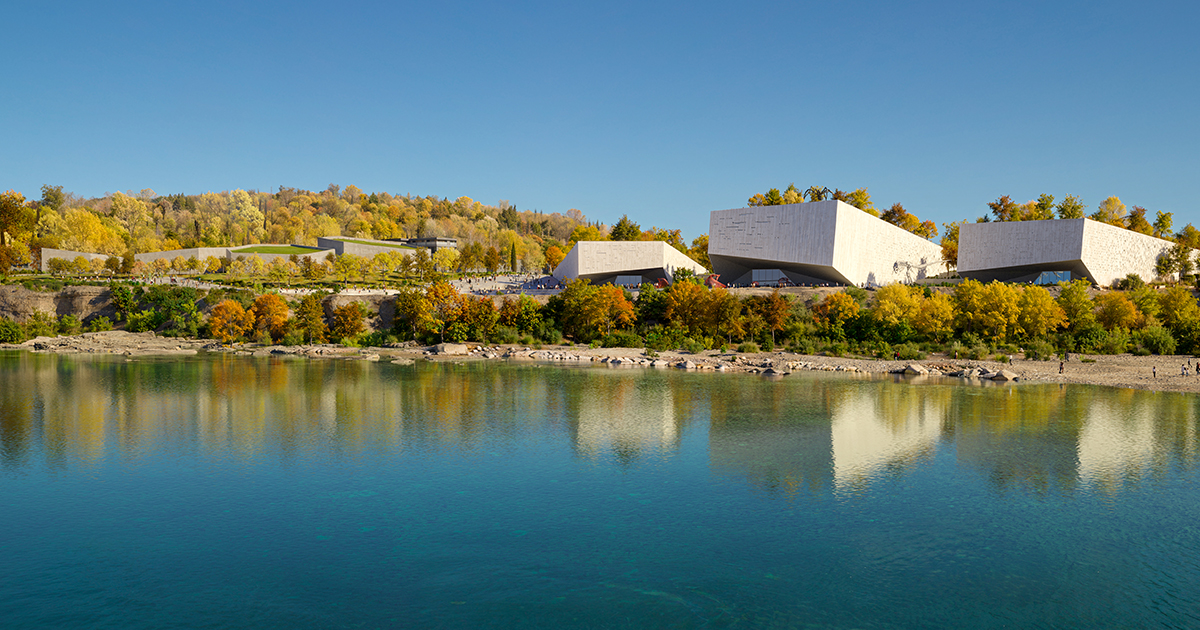
a-fact architecture factory: Winner of the Architect of the Year Awards 2025. Positioned between Gorica Hill and Malo Brdo Hill, the project site extends along the western edge of the Morača River, where mature vegetation and a strong natural character define the landscape. This setting, together with the historical identity of Podgorica and the legacy of areas such as Stara Varoš, informs a vision for a new Arts and Culture District that grows directly from its environmental and urban context.

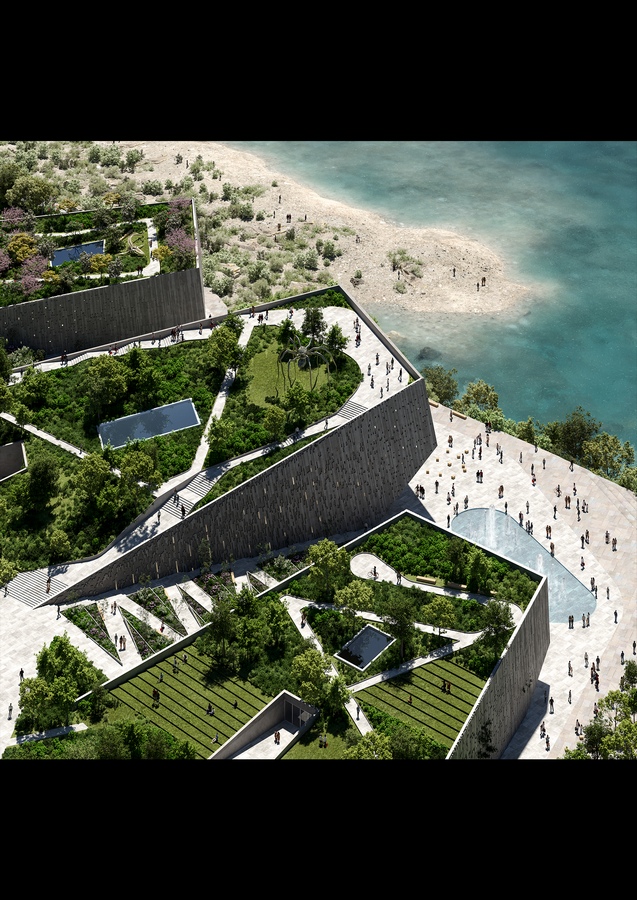
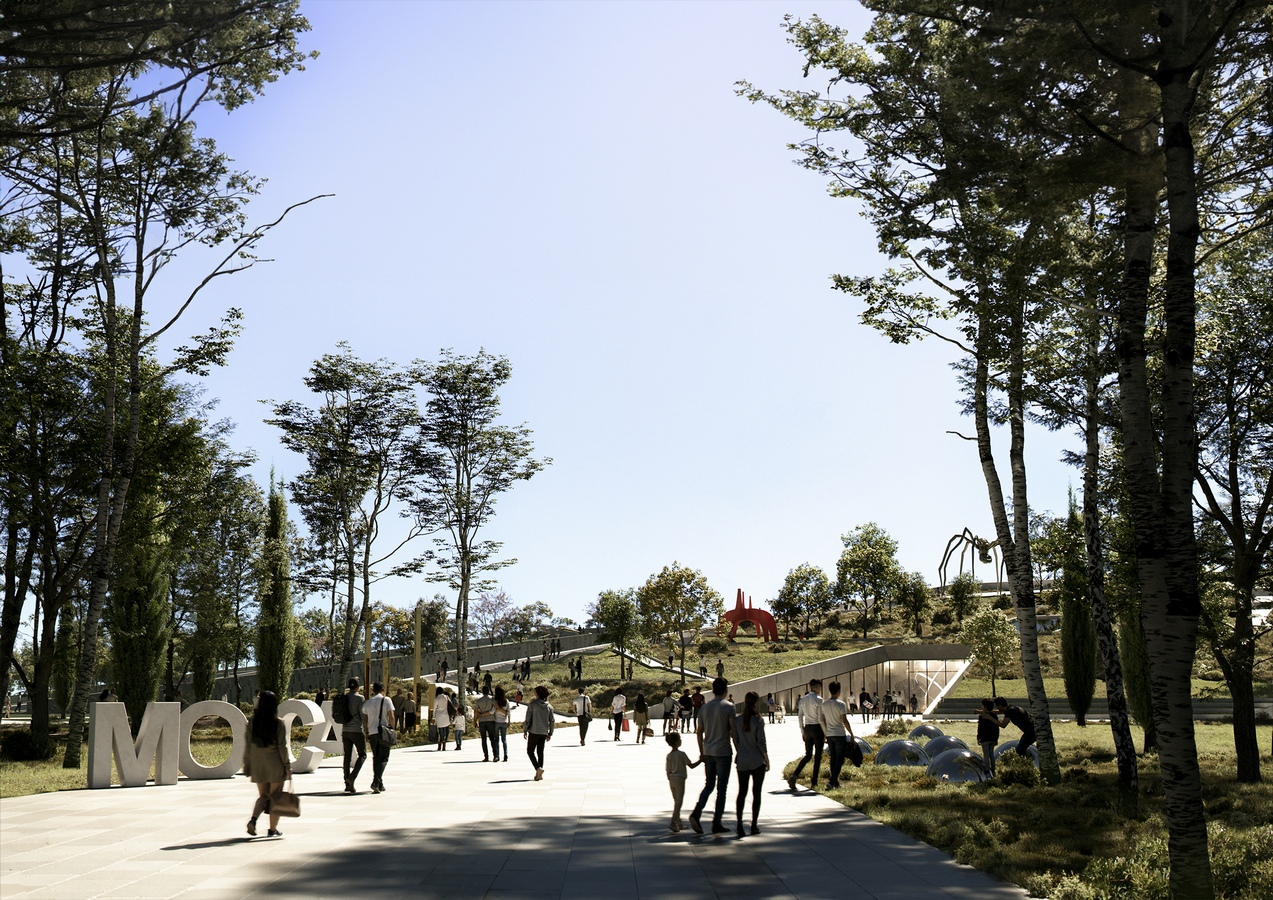
The masterplan is structured around two complementary landscapes that operate as a single green framework. The upper Park of Arts & Culture connects naturally to the city and provides a densely planted civic setting, while the lower Morača River Park engages more closely with the river and is shaped to safely accommodate its seasonal behaviour. Their combined presence establishes a continuous ecological platform that integrates public space, architecture and topography into a unified spatial experience.
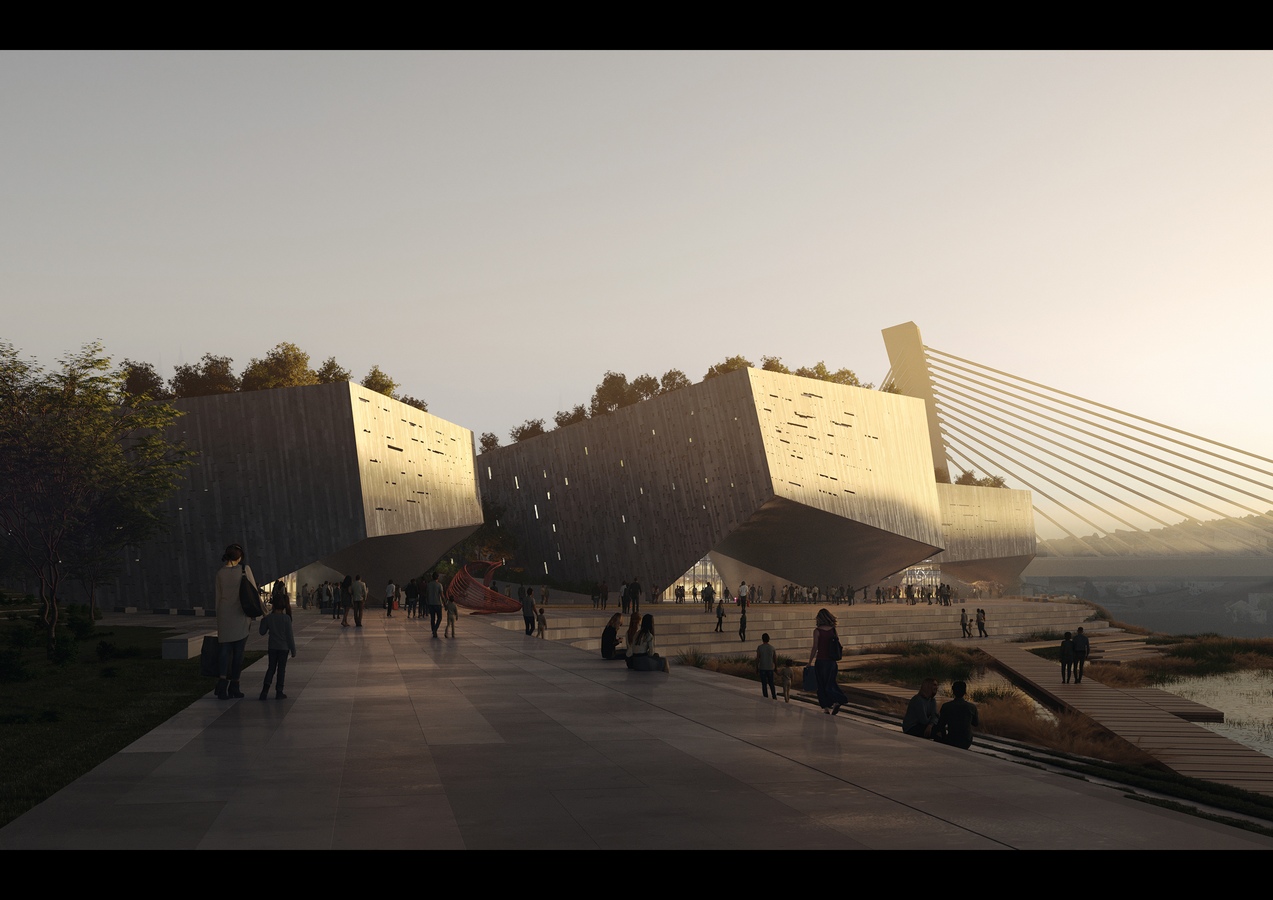
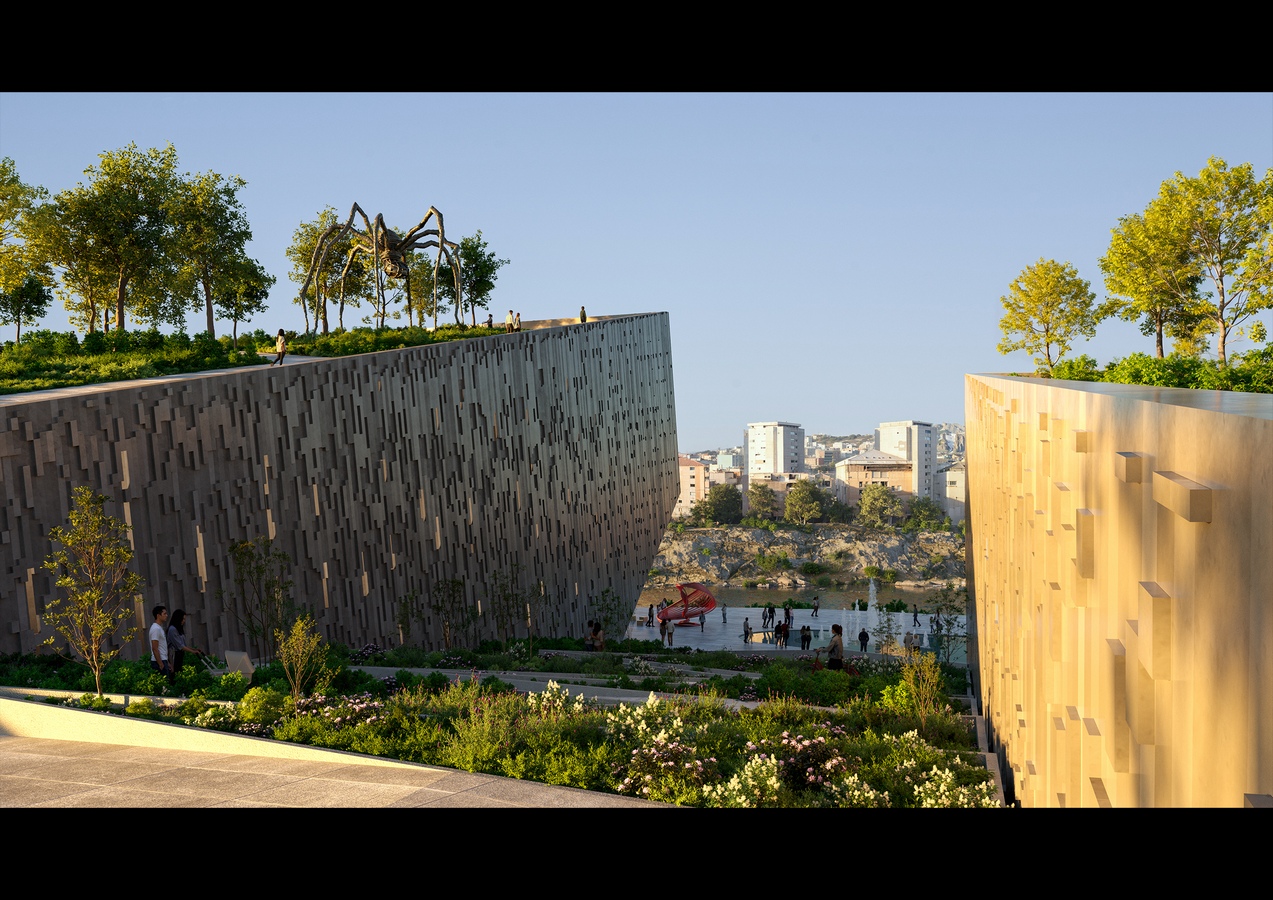
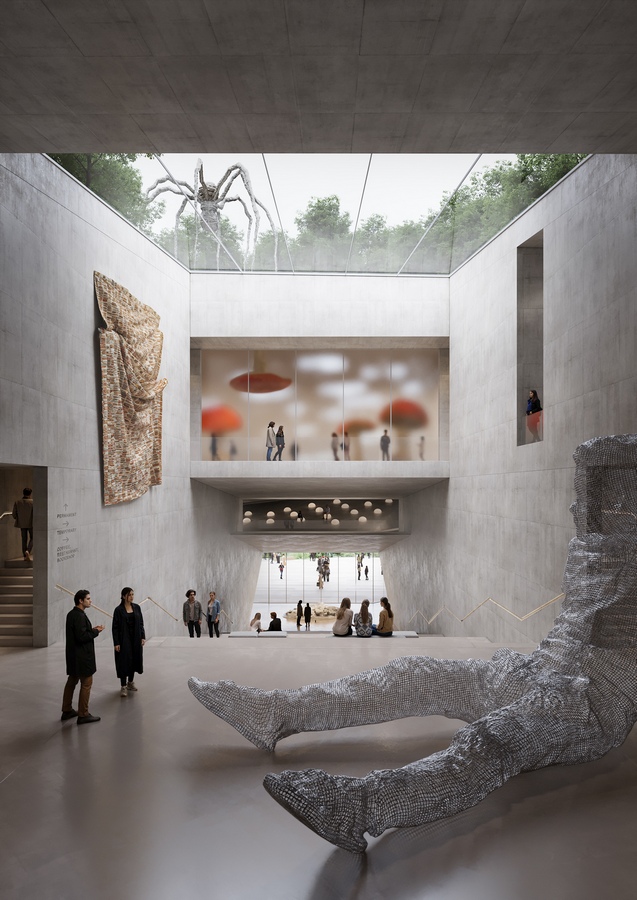
Emerging from this landscape are three museum buildings whose materiality and form echo the geological character of Montenegro. Stone façades reference the surrounding mountains and define a contemporary architectural language that reinforces the relationship between the buildings, the park and the river. The structures rise gently from the terrain while a planted roof folds back into the site, extending the landscape across the architecture and offering new vantage points over the riverfront. This approach erases traditional boundaries between built and natural environments, enabling seamless movement across the entire district.
The program supports a wide range of cultural and educational activities. The Museum of Contemporary Art, the Museum of Natural History and the House of Architecture accommodate exhibition spaces, research and teaching laboratories, informal gathering areas, a botanical garden and an outdoor events terrace overlooking the water. Together, these spaces create a multifunctional cultural ecosystem where art, science and community meet. Indoor and outdoor areas are intentionally interwoven, allowing visitors to experience the district as an interconnected sequence of environments.
Landscape design plays a defining role in establishing the ecological identity of the project. Existing natural features are preserved and expanded through additional planting that enhances biodiversity and strengthens the district’s environmental performance. Improved access to the riverfront reinforces the connection between the city and the landscape, making the presence of the water a central element of the public experience.
Sustainability is embedded throughout the proposal. Passive and active strategies reduce energy consumption for heating, cooling, lighting and water use, while contemporary construction techniques combined with locally sourced materials limit environmental impact over the buildings’ full life cycle. This approach supports a broader vision of architecture that contributes to the restoration and renewal of the river landscape and aligns with current ecological priorities.
Overall, the project defines a new cultural and environmental identity for Podgorica – an integrated district where museums, landscape and public life converge to shape a civic destination that is both contemporary and deeply rooted in place.

Project Details:-
Firm
a-fact architecture factory
Architect
Giovanni Sanna
Project Name
Podgorica Museum District
Project Category
Cultural Concept
Team
a-fact architecture factory, LAND Italia s.r.l. , Maffeis Engineering s.p.a, Charcoal Blue LLP
Project Location
Podgorica (ME)
Country
Italy
Photography ©Credit
©a-fact architecture factory, ©Emmeworks
A-FACT, founded in 2022 by Andrea Rossi, Giovanni Sanna and Pierluigi Turco, is a multidisciplinary practice based in Milan and London. We are architects, thinkers, engineers and designers committed to shaping resilient ecosystems where people can live, work and thrive. Our approach, rooted in factual sustainability, transforms contextual data into integrated architectural strategies while embracing complexity and avoiding oversimplification. Through collaboration with specialists across disciplines, we address environmental, economic and social challenges with adaptive, sustainable design. This responsibility to imagine flexible cities, buildings and spaces defines what we call the A Factor.