

Flat Heritage | Foco Luz e Desenho | International Residential Architecture Awards 2025
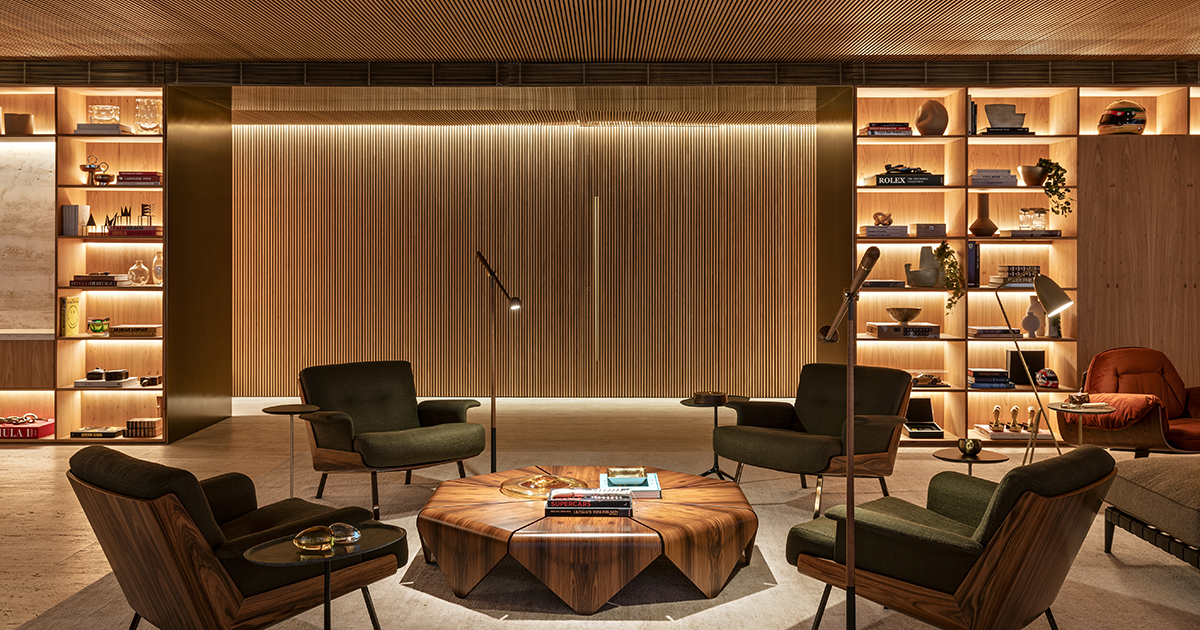
Foco Luz e Desenho: Winner of International Residential Architecture Awards 2025. At Flat Heritage, lighting was conceived as a direct extension of the architecture, shaping atmosphere, revealing surfaces and guiding spatial perception. In an environment dominated by warm wooden finishes, light becomes the element that highlights texture, deepens shadows and balances the contrasts inherent to the project.

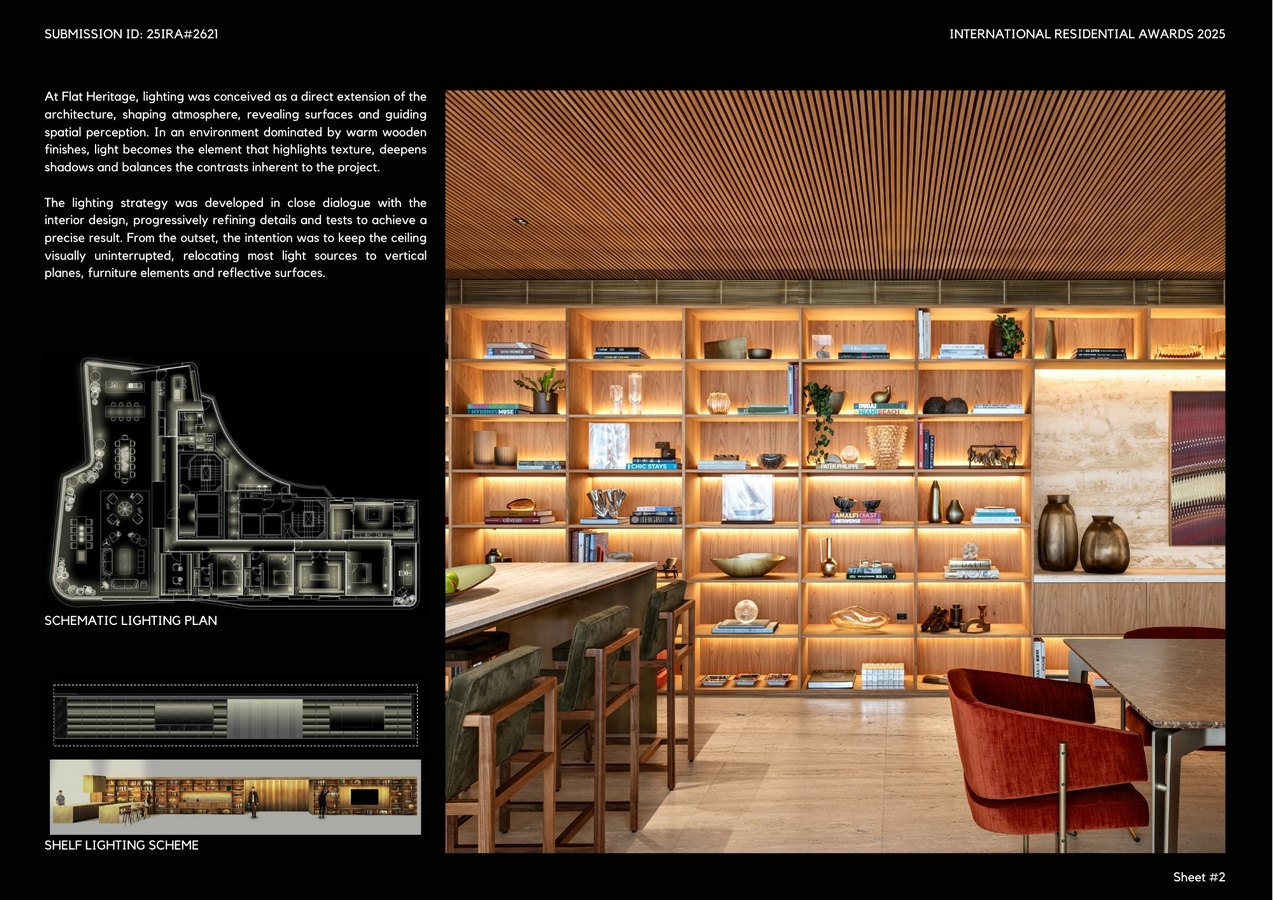
The lighting strategy was developed in close dialogue with the interior design, progressively refining details and tests to achieve a precise result. From the outset, the intention was to keep the ceiling visually uninterrupted, relocating most light sources to vertical planes, furniture elements and reflective surfaces.
Contrast, diffusion and focal points
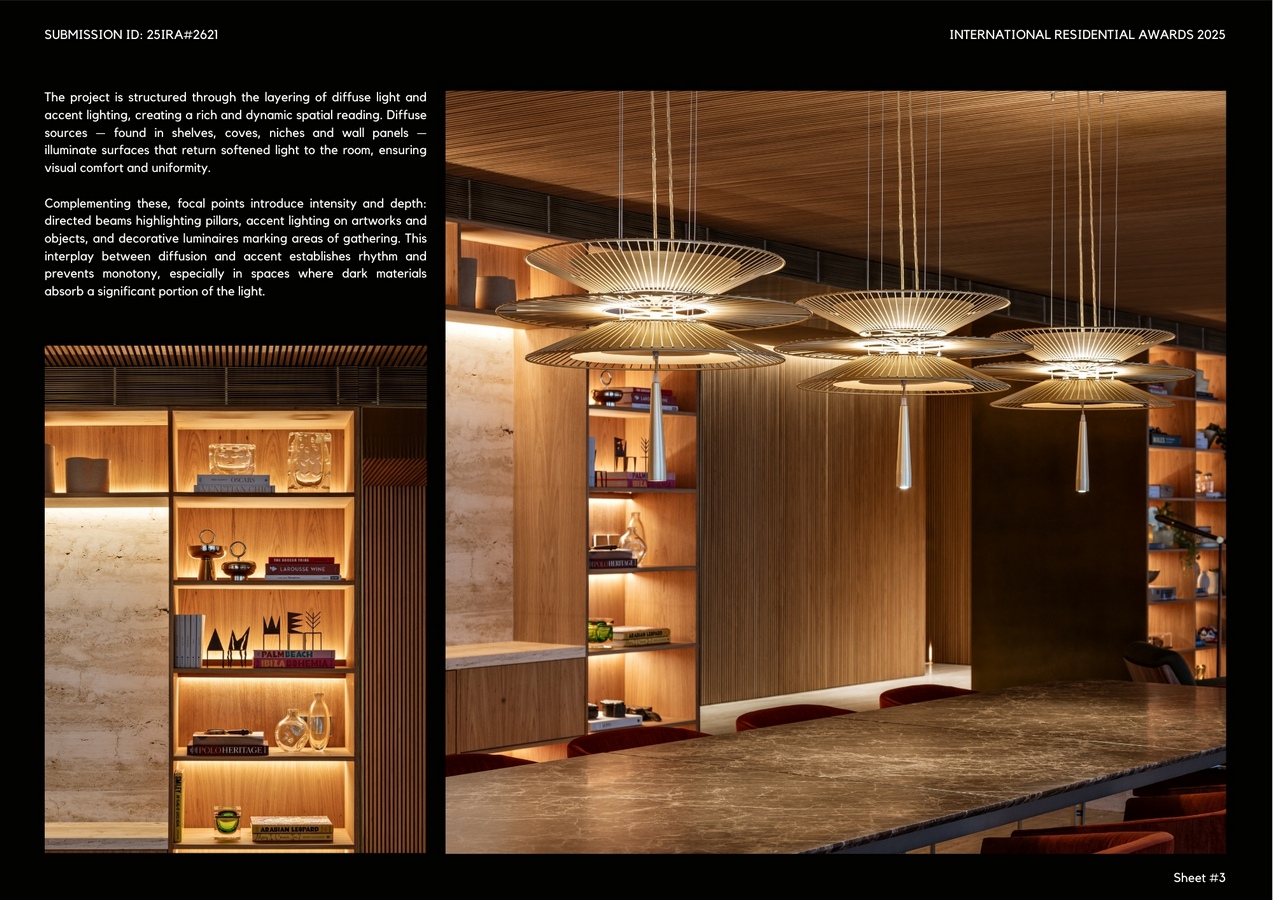
The project is structured through the layering of diffuse light and accent lighting, creating a rich and dynamic spatial reading. Diffuse sources — found in shelves, coves, niches and wall panels — illuminate surfaces that return softened light to the room, ensuring visual comfort and uniformity.
Complementing these, focal points introduce intensity and depth: directed beams highlighting pillars, accent lighting on artworks and objects, and decorative luminaires marking areas of gathering. This interplay between diffusion and accent establishes rhythm and prevents monotony, especially in spaces where dark materials absorb a significant portion of the light.
Integrated detailing and technical precision
The decision to avoid exposed ceiling fixtures led to a series of solutions fully integrated into the architecture. Linear profiles were concealed within coves, furniture, and structural gaps, eliminating glare risks while preserving the visual continuity of the surfaces.
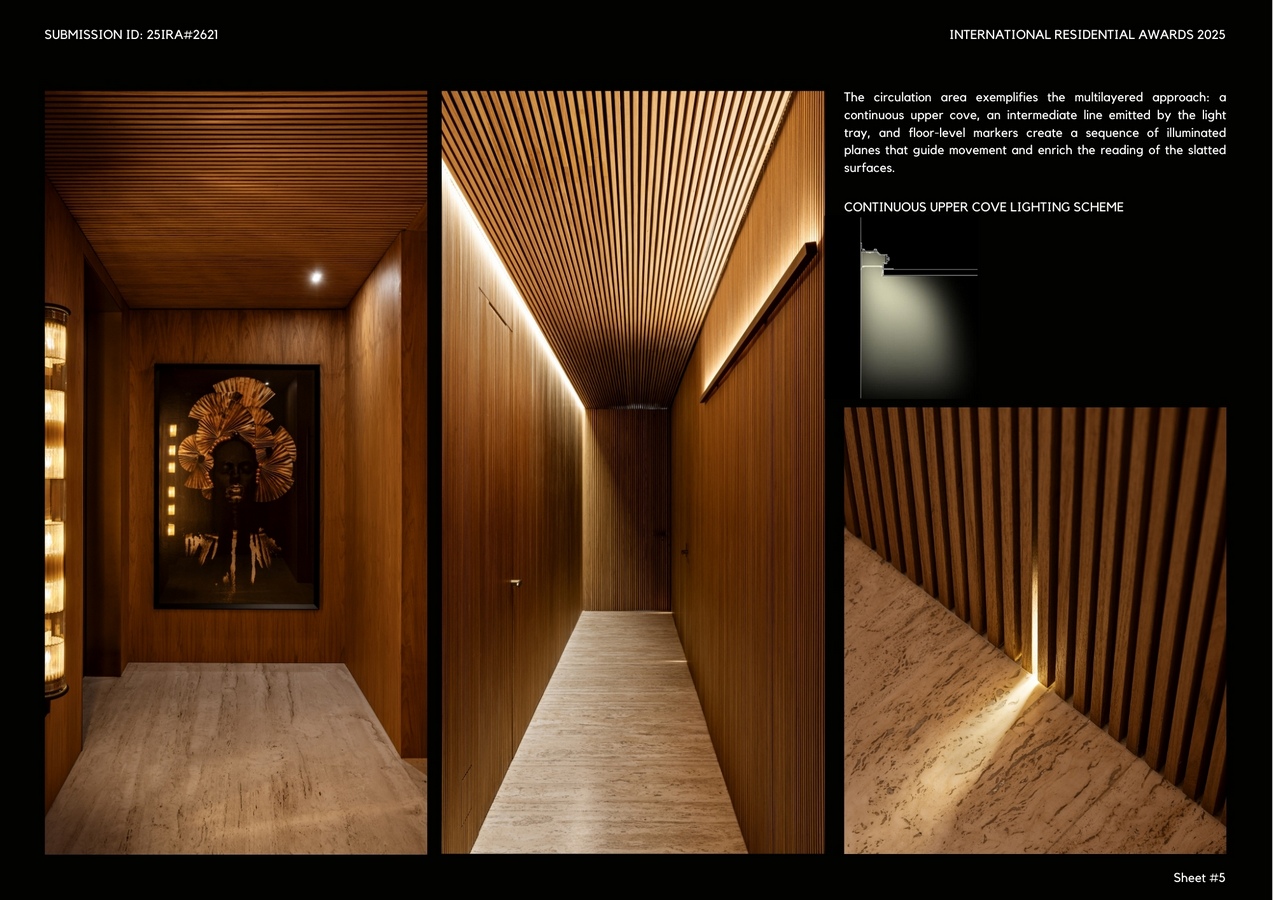
Some elements were developed specifically for this project, such as the light tray running along the circulation area—casting a soft beam over the slatted wall—and the recessed floor-level marker integrated into the baseboard, which guides movement without exposing the light source. Detailing also involved calibrating light output and distribution according to surface color and texture, a crucial step when combining dark wood finishes with light backgrounds.
In the niches, different approaches were adopted depending on the objects displayed:
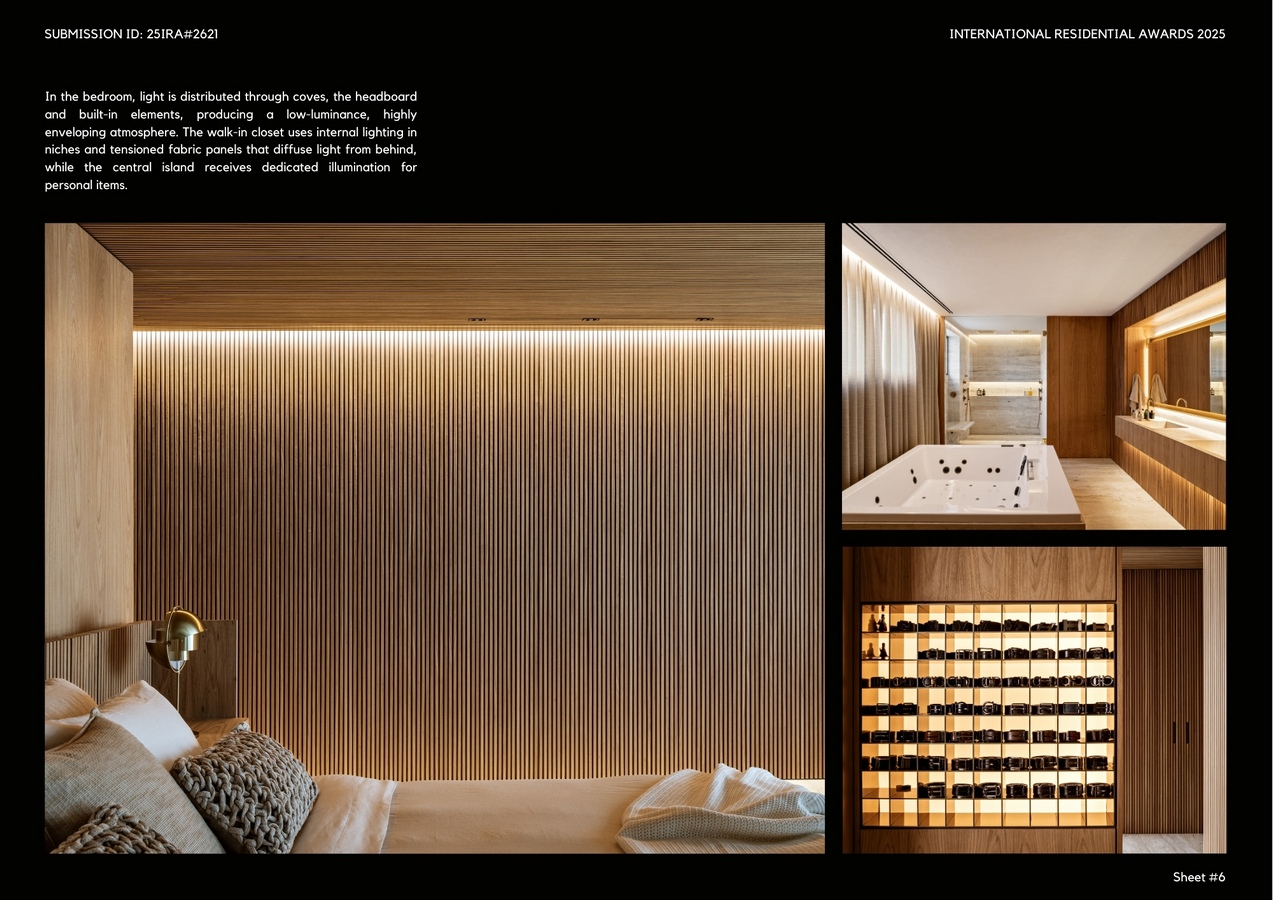
– backlighting to emphasize depth and highlight the wooden background;
– front lighting when direct visibility of larger collections was required.
This technical variation ensures balance between brightness, contrast and visual hierarchy.
Circulation, private areas and powder room – light as spatial narrative
The circulation area exemplifies the multilayered approach: a continuous upper cove, an intermediate line emitted by the light tray, and floor-level markers create a sequence of illuminated planes that guide movement and enrich the reading of the slatted surfaces.
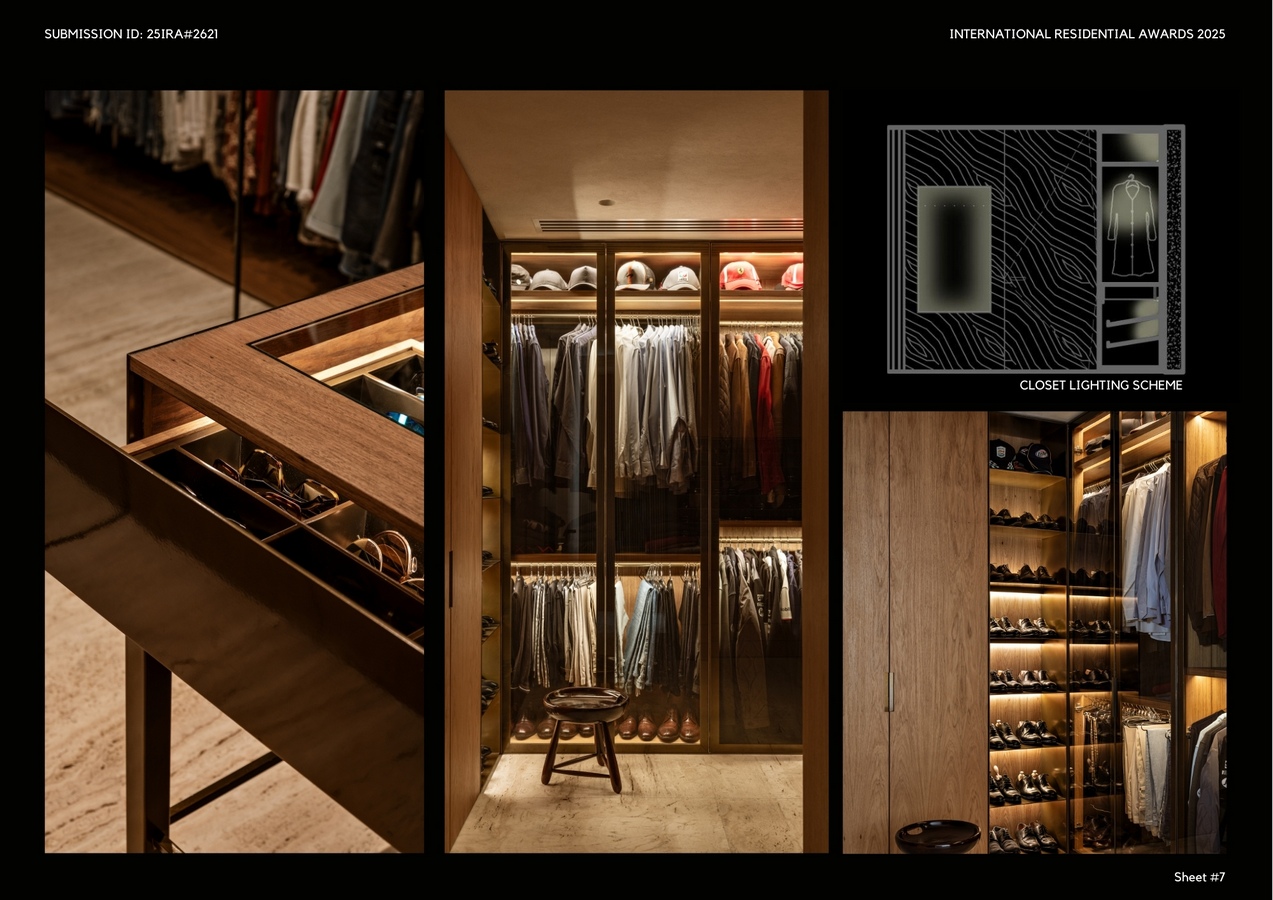
In the bedroom, light is distributed through coves, the headboard and built-in elements, producing a low-luminance, highly enveloping atmosphere. The walk-in closet uses internal lighting in niches and tensioned fabric panels that diffuse light from behind, while the central island receives dedicated illumination for personal items.
The powder room stands out for its combination of indirect light — placed behind the mirror and beneath the countertop — and a decorative side fixture that reinforces the reddish texture of the surfaces and defines the room’s focal point.
Light as an extension of architecture
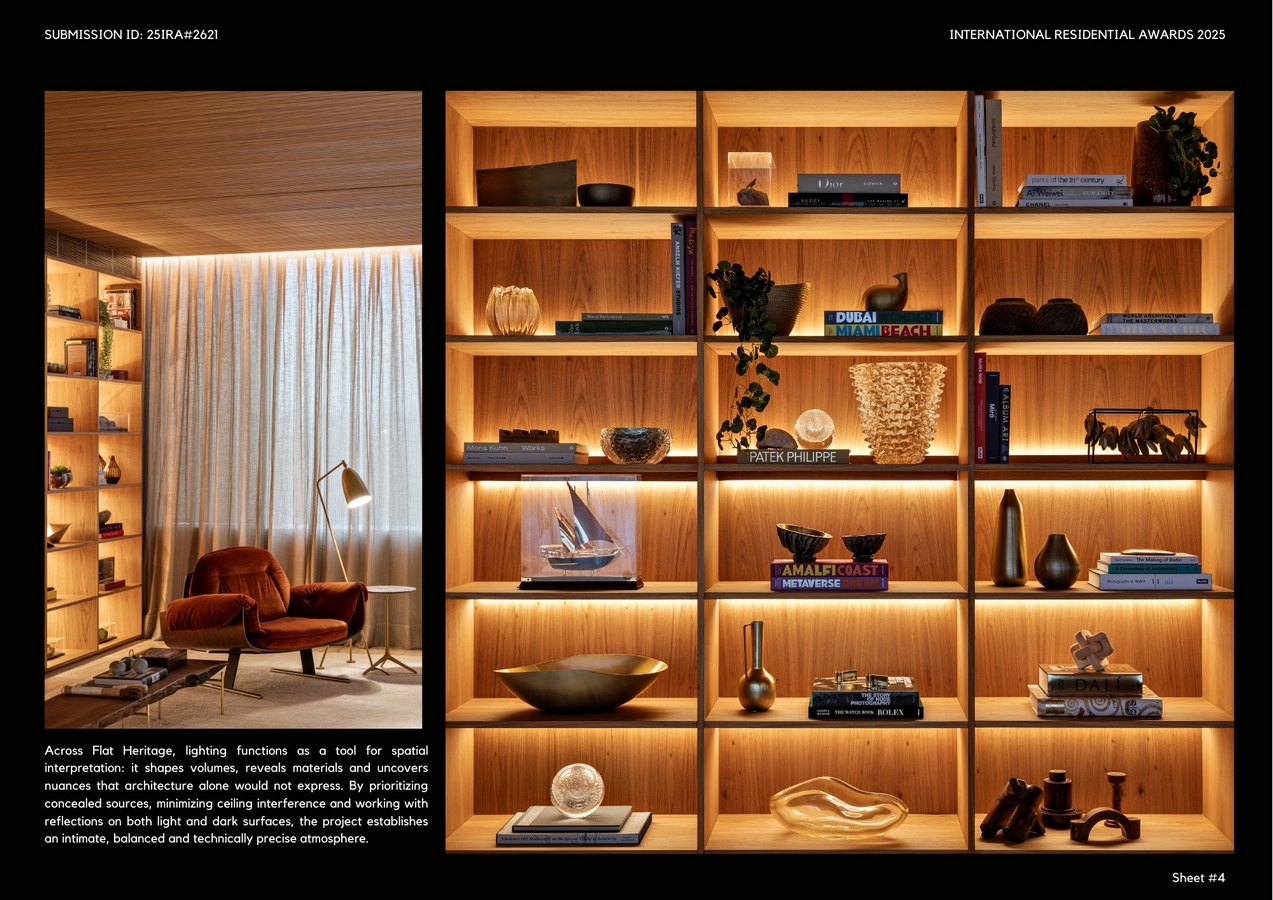
Across Flat Heritage, lighting functions as a tool for spatial interpretation: it shapes volumes, reveals materials and uncovers nuances that architecture alone would not express. By prioritizing concealed sources, minimizing ceiling interference and working with reflections on both light and dark surfaces, the project establishes an intimate, balanced and technically precise atmosphere. The result is an apartment in which the sensory experience is guided by light — not as an accessory, but as an integral part of the architectural composition.

Project Details:-
Firm
Foco Luz e Desenho
Architect
Junia Azenha and Ana Karina Camasmie
Project Name
Flat Heritage
Project Category
Lighting Design Built
Team
Junia Azenha, Ana Karina Camasmie, Camila Rocha, Fernanda Rosenzvaig, Giovanni Grigio, Fernanda Leite, Jonatas Oliveira
Project Location
São Paulo
Country
Brazil
Photography ©Credit
©Fran Parente



About Foco Luz e Desenho
Founded in 2004 by architects and lighting designers Junia Azenha and Ana Karina Camasmie, Foco Luz & Desenho is a Brazilian practice specialized in architectural lighting design across corporate, commercial, and residential sectors. With a multidisciplinary team of 30 professionals, the studio combines technical expertise, creative sensibility, and a strong commitment to results. Its award-winning portfolio includes honors such as the iF Design Award 2024, AZ Awards 2023, and World Architecture Festival 2023. With over 3,000 projects completed, Foco Luz & Desenho continues to explore light as a design tool that transforms spaces and creates meaningful human experiences.