

Planning and Design of the Buddhist Tzu Chi Foundation Malaysia Branch Office | The Second Construction Limited Company of China Construction Eighth Engineering Division Design and Research Institute | World Design Awards 2025
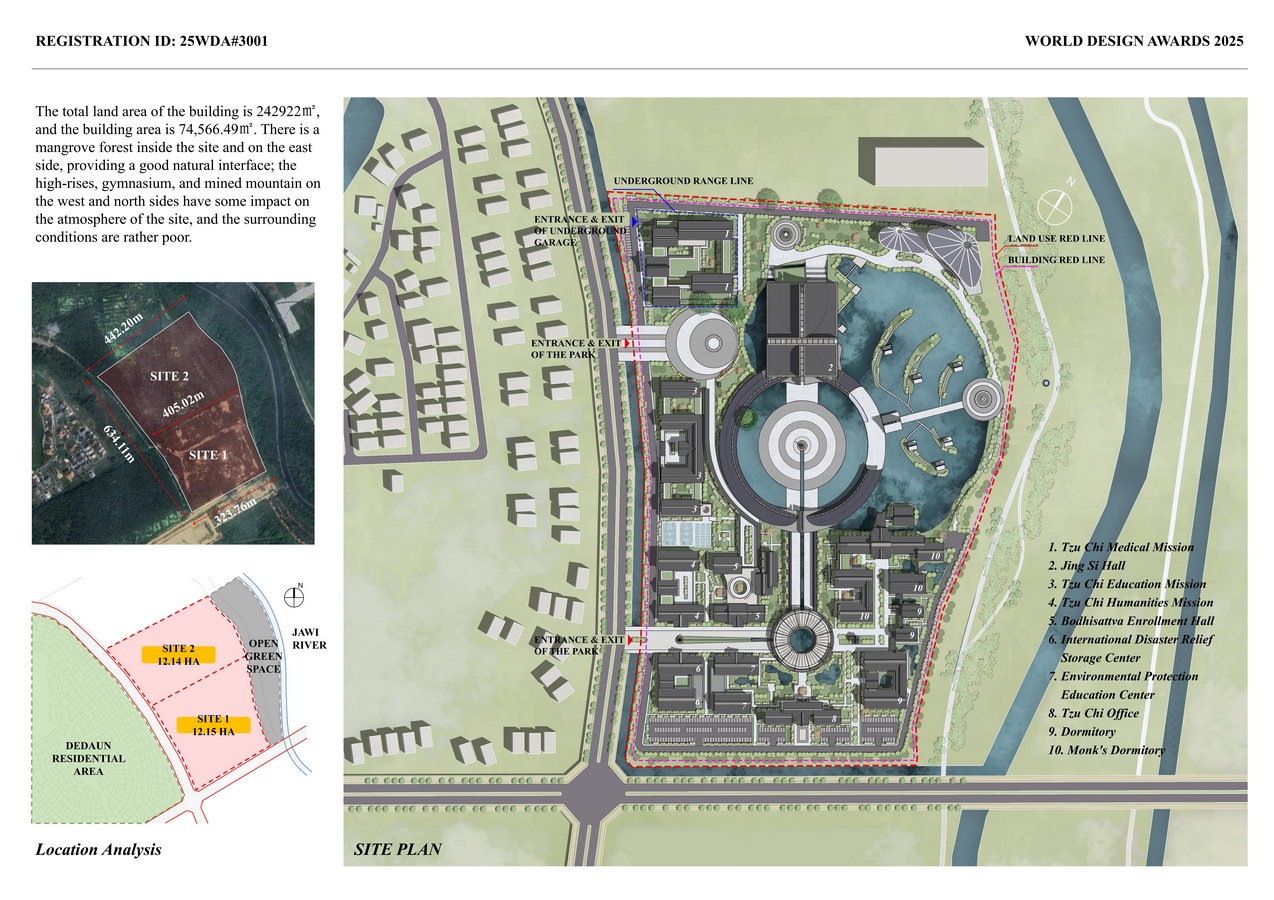
The Second Construction Limited Company of China Construction Eighth Engineering Division Design and Research Institute: Winner of World Design Awards 2025. The project is located in Seberang Perai, Penang State, Malaysia. To the north of the site are a power transformation substation and a gymnasium; to the west lies an existing residential area; to the south is a planned expressway development project; to the east is the Jawi River, with an open space lying between the Jawi River and the site. The east side of the Jawi River is planned as an industrial zone, and the surrounding functions of the site are blended, with various types of land uses mixed. The south and west sides of the site are connected to municipal roads, but the south side is planned for an expressway with unknown conditions. The overall traffic situation is relatively poor; meanwhile, to avoid the main entrance being designed under a bridge, the entrance and exit are designed on the planned road determined on the west side.phasizing a fluid internal circulation that guides visitors across the site.

The total land area of the building is 242,922 ㎡, and the building area is 74,566.49㎡. There is a mangrove forest inside the site and on the east side, providing a good natural interface; the high-rises, gymnasium, and mined mountain on the west and north sides have some impact on the atmosphere of the site, and the surrounding conditions are rather poor.
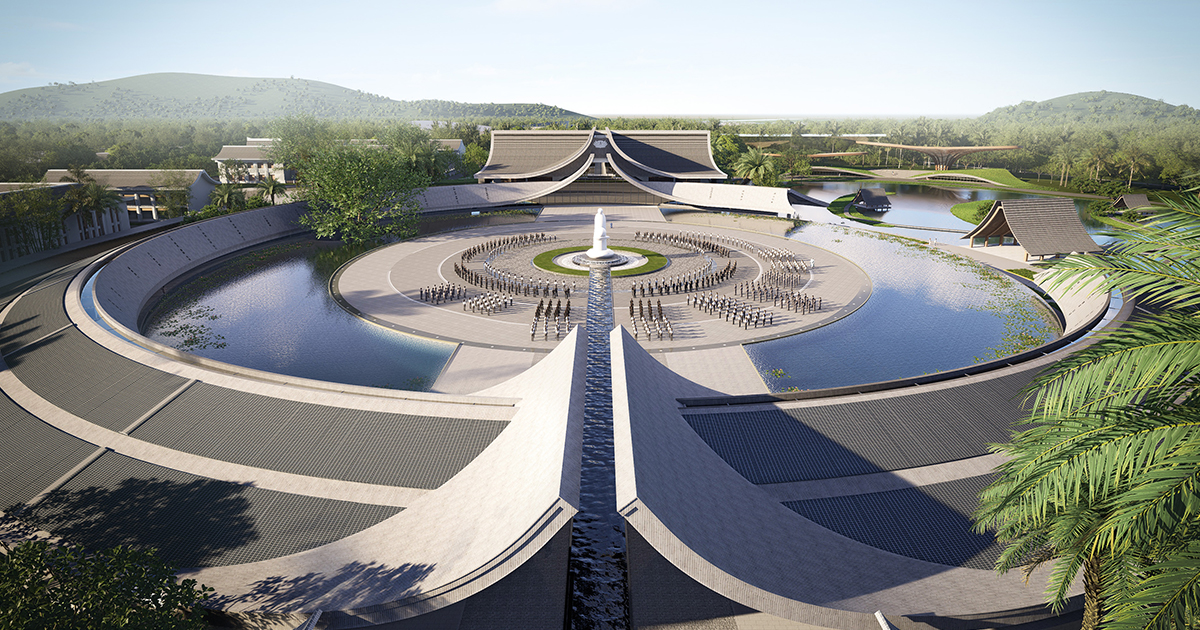
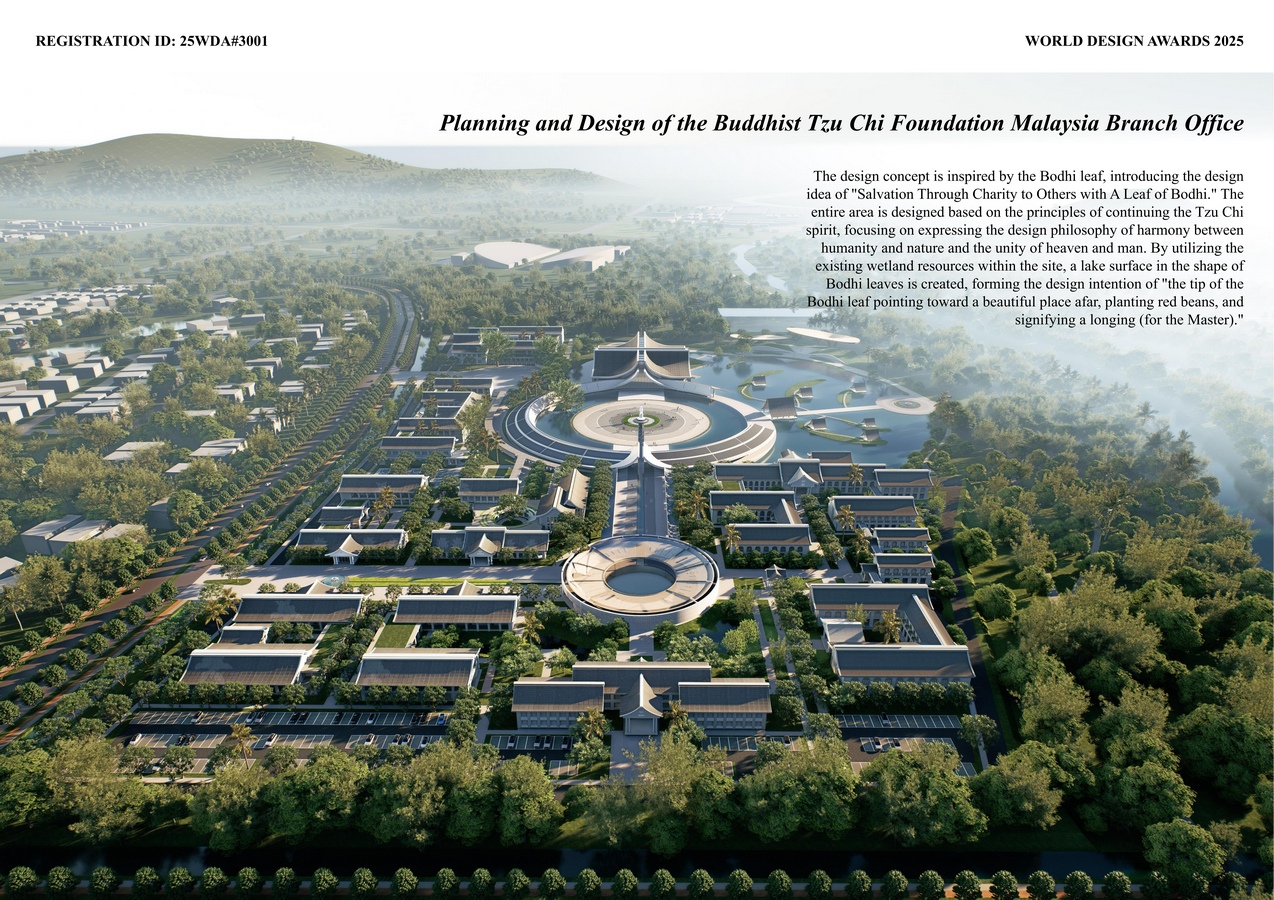
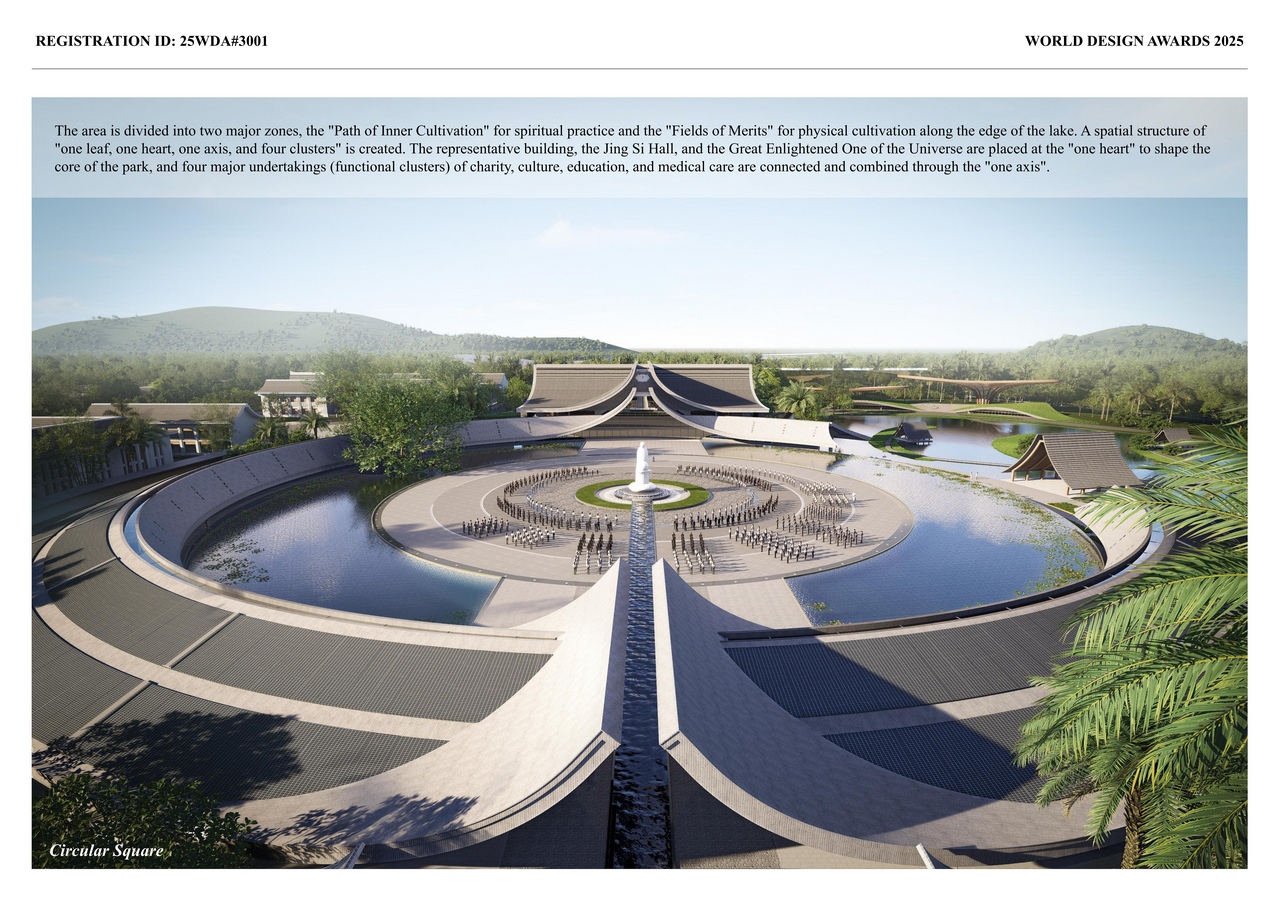
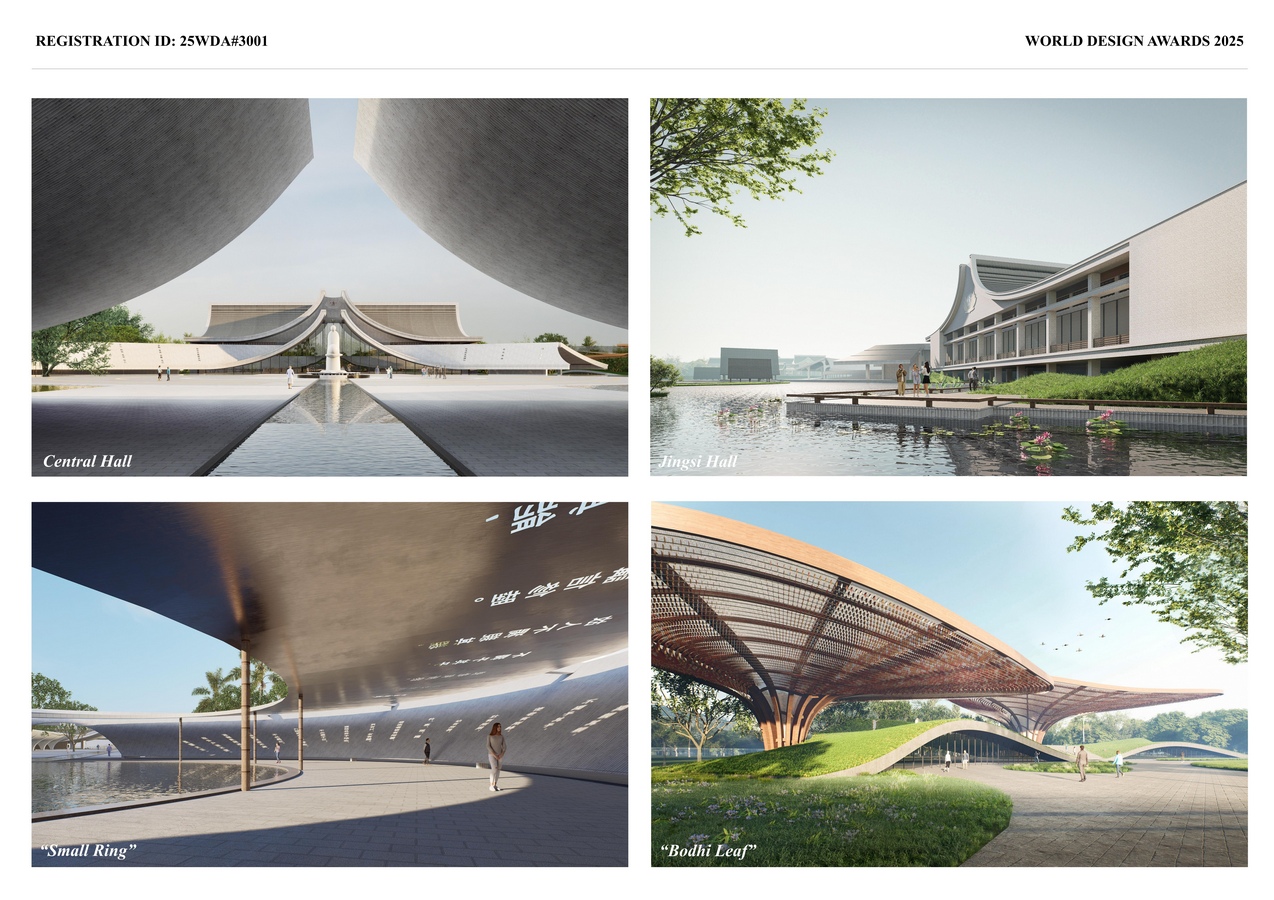
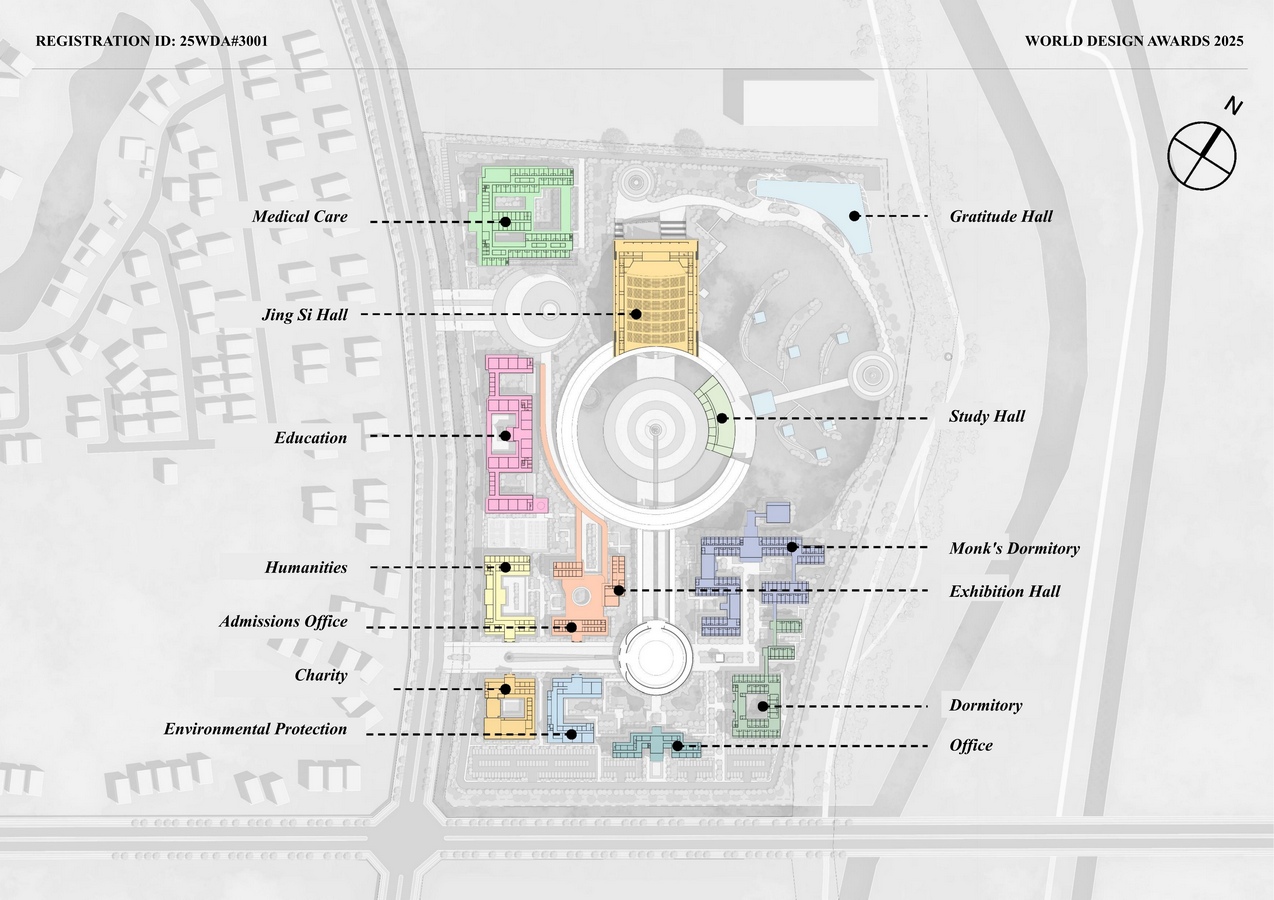
Design concept: The design concept is inspired by the Bodhi leaf, introducing the design idea of “Salvation Through Charity to Others with A Leaf of Bodhi.” The entire area is designed based on the principles of continuing the Tzu Chi spirit, focusing on expressing the design philosophy of harmony between humanity and nature and the unity of heaven and man. By utilizing the existing wetland resources within the site, a lake surface in the shape of Bodhi leaves is created, forming the design intention of “the tip of the Bodhi leaf pointing toward a beautiful place afar, planting red beans, and signifying a longing (for the Master).” The area is divided into two major zones, the “Path of Inner Cultivation” for spiritual practice and the “Fields of Merits” for physical cultivation along the edge of the lake. A spatial structure of “one leaf, one heart, one axis, and four clusters” is created. The representative building, the Jing Si Hall, and the Great Enlightened One of the Universe are placed at the “one heart” to shape the core of the park, and four major undertakings (functional clusters) of charity, culture, education, and medical care are connected and combined through the “one axis”.
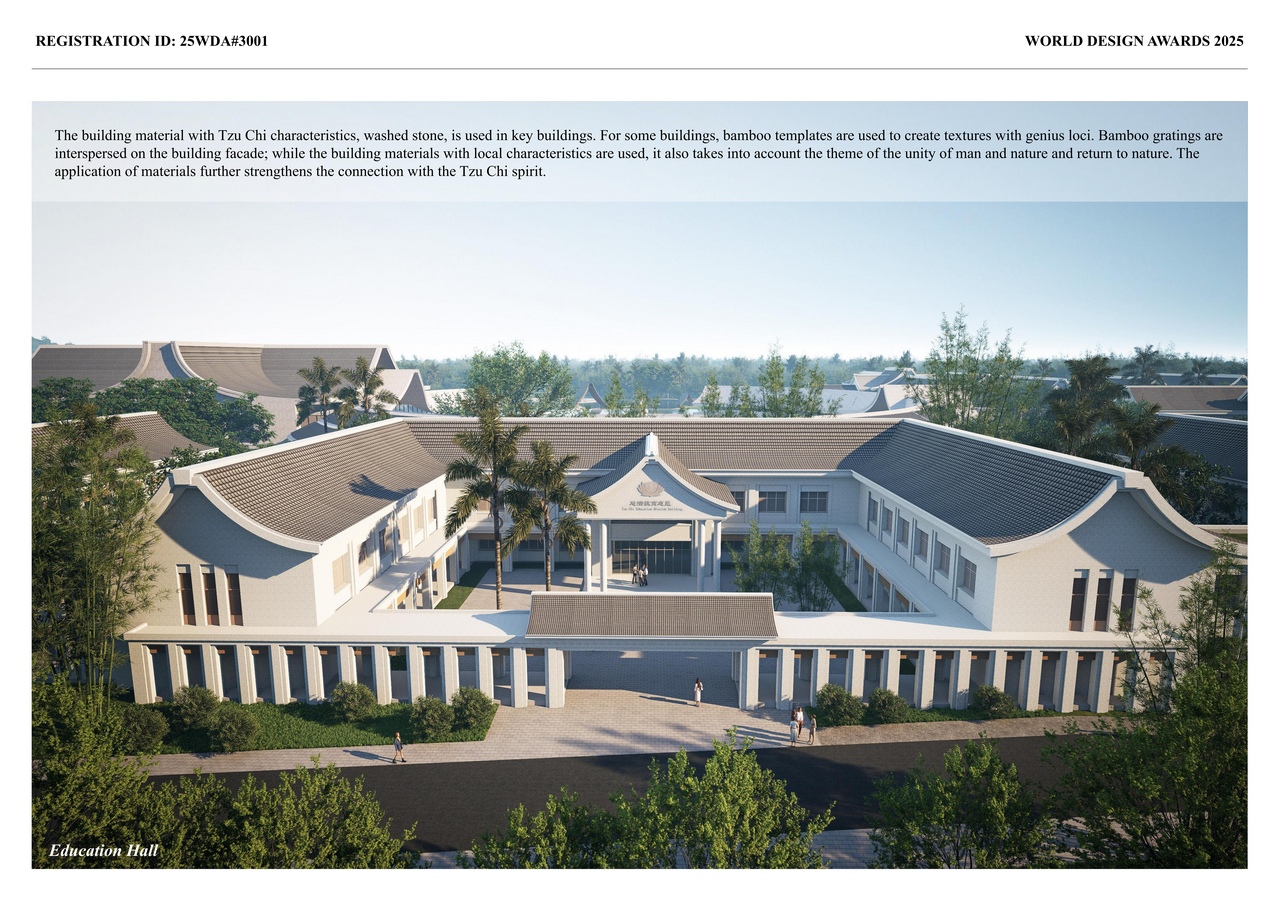
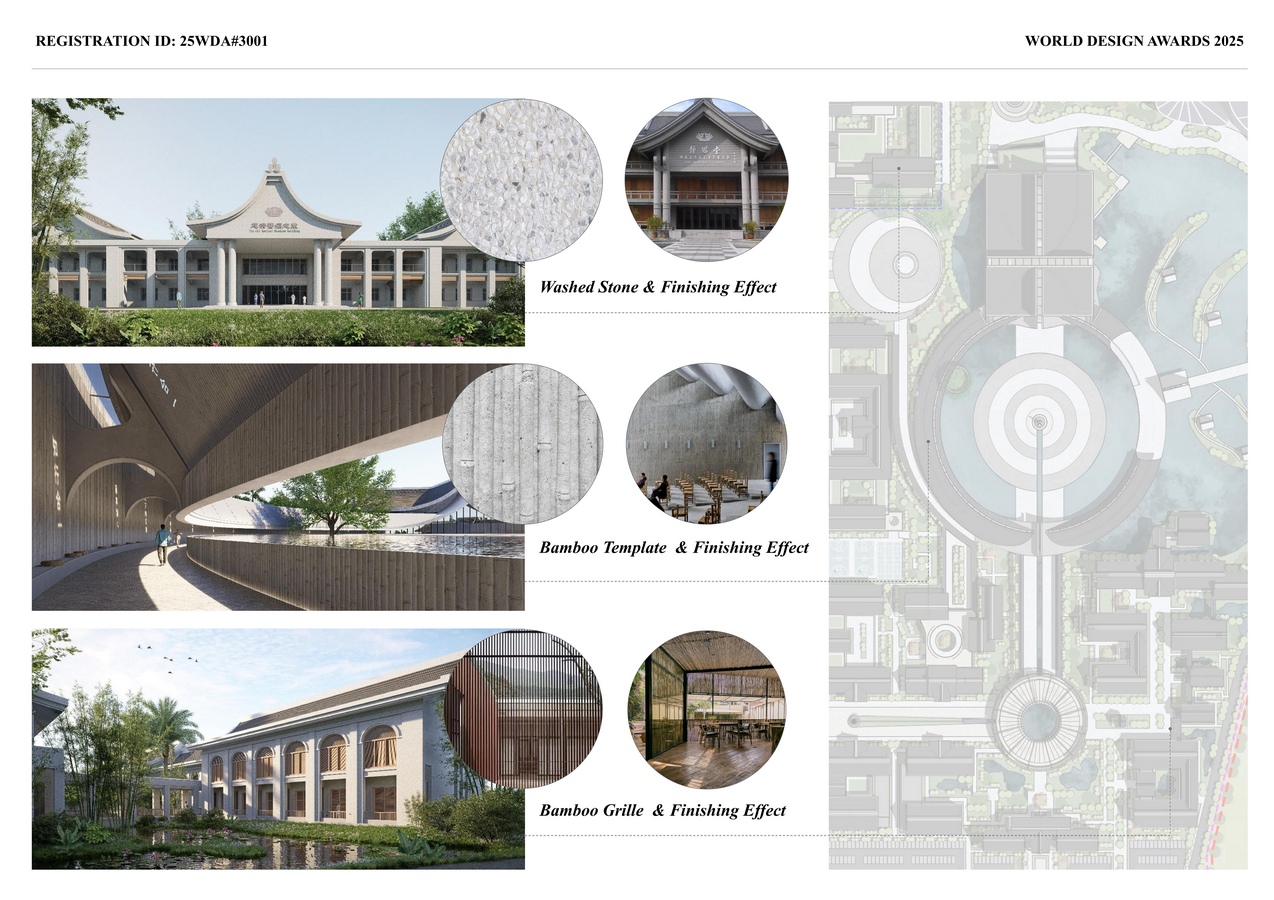
Use of materials: The building material with Tzu Chi characteristics, washed stone, is used in key buildings. For some buildings, bamboo templates are used to create textures with genius loci. Bamboo gratings are interspersed on the building facade; while the building materials with local characteristics are used, it also takes into account the theme of the unity of man and nature and return to nature. The application of materials further strengthens the connection with the Tzu Chi spirit.
Technological innovation: To shape the genius loci and a sense of ritual and create a form of water flowing backward for the Spring of Dharma Lineage, PAVEGEN floor tiles are used so that visitors can generate electricity by stepping on them. By using power-driven water pumps and segmented backflow techniques, a marvelous effect of “water flowing upwards” is created.
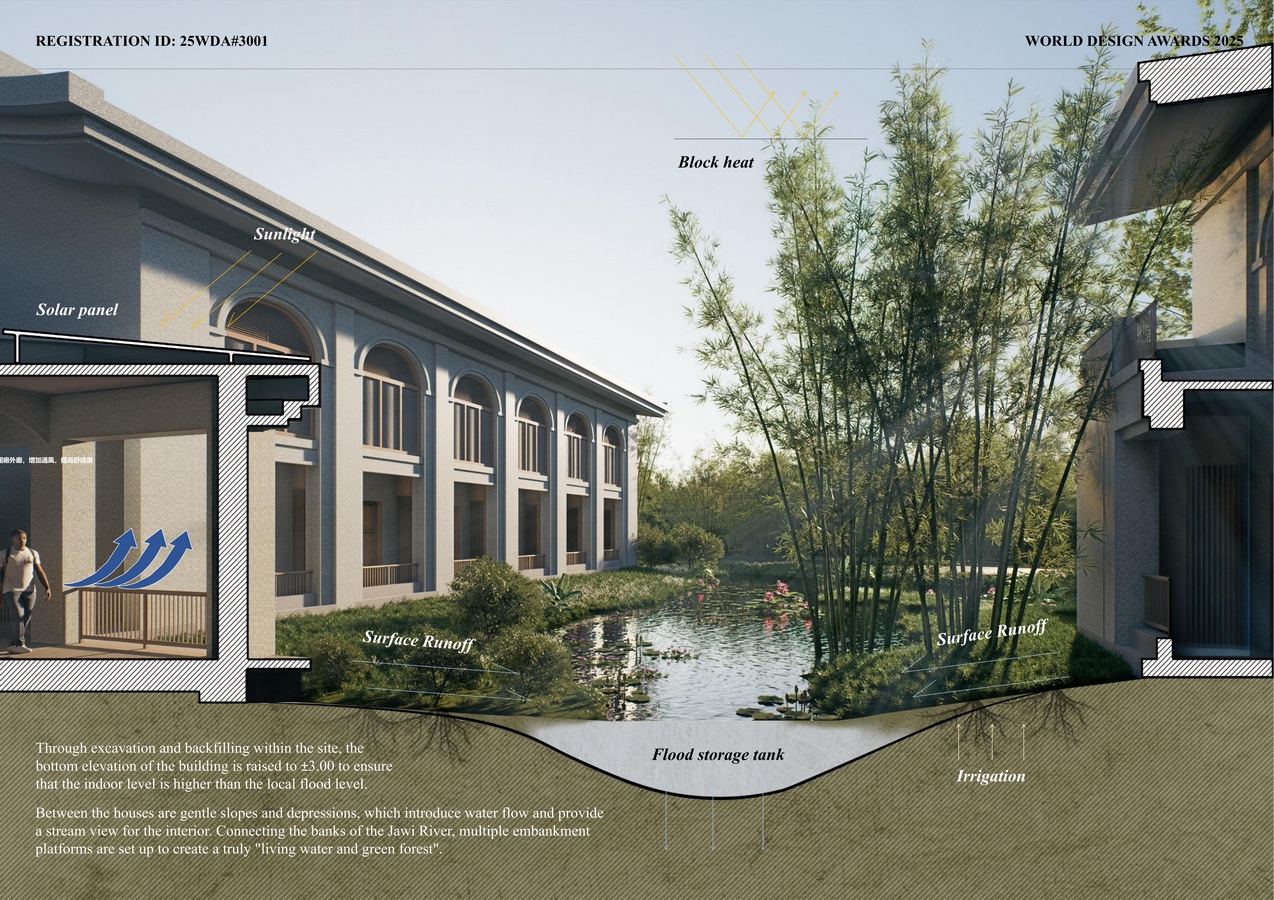
Environmental protection measures: A large number of trees in the mangrove forest are retained on the site to reduce damage to vegetation. The base itself is located in a flood-prone area. Therefore, a form of living water, green forests, and multi-purpose “fields of merits” is created; through excavation and backfilling within the site, water flow is introduced to provide a landscape, and meanwhile, the “fields of merits” can be used for daily cultivation and serve as flood-discharge areas in case of floods.

Project Details:-
Firm
The Second Construction Limited Company of China Construction Eighth Engineering Division Design and Research Institute
Architect
Dawei Wang
Project Name
Planning and Design of the Buddhist Tzu Chi Foundation Malaysia Branch Office
Project Category
Architecture Design – (Concept)
Team
Wang Dawei, Jia Yudong, Sun Yaxin, Sun Teng, Chen Zhiqiang, Chen Dedong, Cao Haotian, Mu Jianxiang, Wang Ying, Wang Zhaoyan, Gao Yan, Zhou Junyuan
Project Location
Seberang Perai
Country
China
Photography ©Credit
The Second Construction Limited Company of China Construction Eighth Engineering Division Design and Research Institute

The Second Construction Limited Company of China Construction Eighth Engineering Division Design and Research Institute affiliated to China Construction eight bureau second Construction Co., Ltd., which is a state-owned large-scale design and research institute with top qualifications and business capabilities.
The firm adheres to the design leadership, and relies on 40 years of project construction experience, from planning, deepening, research and development, investment, operation and other stages to provide customers with the whole process of comprehensive services.
In addition, the design team remains sensitive to urban issues and the needs of The Times, expanding the boundaries of practice. In recent years, they focus on urban renewal, medical health care, high-tech innovation, cultural and tourism integration and other topics, to carry out creation and research and development.