

TRANQUIL MANOR | Shanghai PTArchitects | International Residential Architecture Awards 2025
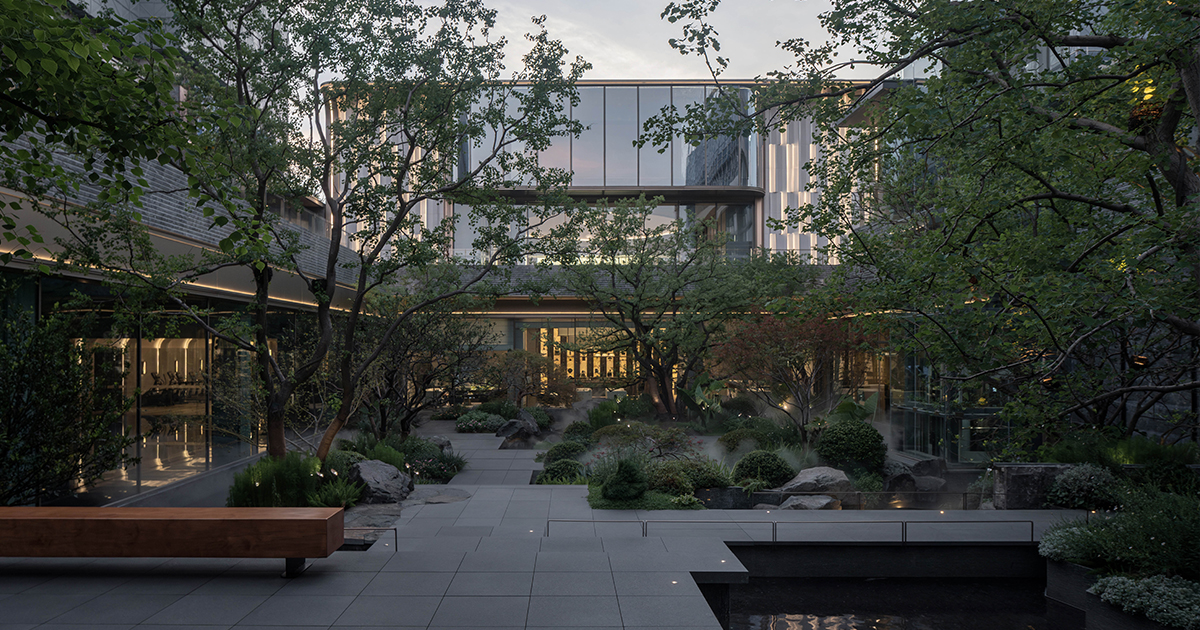
Shanghai PTArchitects: Winner of International Residential Architecture Awards 2025. Tranquil Manor is a modern high-end residential development conceived as an immersive retreat inspired by the classical Eastern “mountain-water” landscape aesthetic. The design draws upon traditional Anhui garden principles – harmonizing architecture with water, greenery, and landforms – and reinterprets them in a contemporary context.

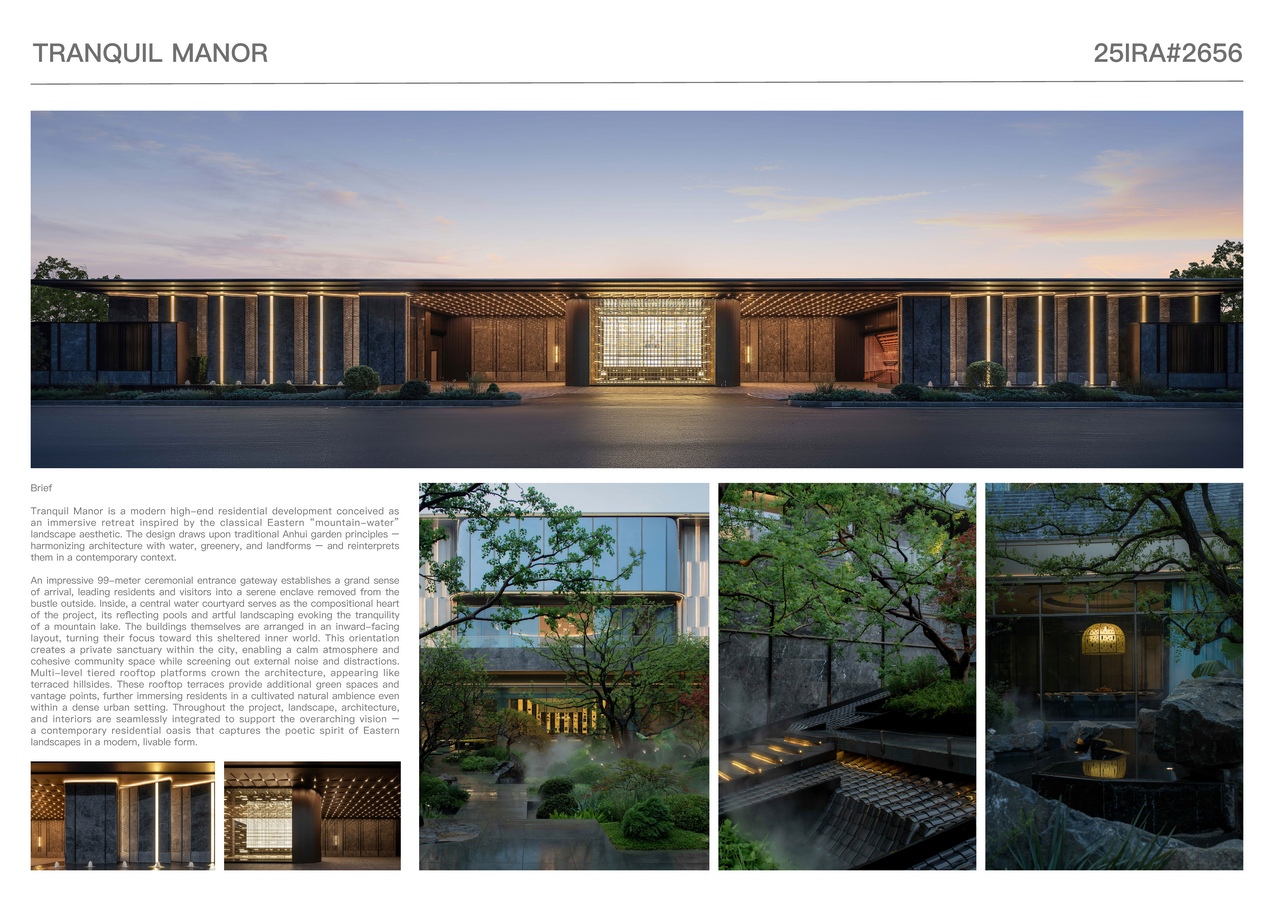
An impressive 99-meter ceremonial entrance gateway establishes a grand sense of arrival, leading residents and visitors into a serene enclave removed from the bustle outside. Inside, a central water courtyard serves as the compositional heart of the project, its reflecting pools and artful landscaping evoking the tranquility of a mountain lake. The buildings themselves are arranged in an inward-facing layout, turning their focus toward this sheltered inner world. This orientation creates a private sanctuary within the city, enabling a calm atmosphere and cohesive community space while screening out external noise and distractions. Multi-level tiered rooftop platforms crown the architecture, appearing like terraced hillsides. These rooftop terraces provide additional green spaces and vantage points, further immersing residents in a cultivated natural ambience even within a dense urban setting. Throughout the project, landscape, architecture, and interiors are seamlessly integrated to support the overarching vision – a contemporary residential oasis that captures the poetic spirit of Eastern landscapes in a modern, livable form.
Challenge/Solution
Designing Tranquil Manor required balancing expansive cultural vision with practical urban constraints. One key challenge was how to create a peaceful, inward-facing community on a site surrounded by city infrastructure. The solution was a perimeter-building arrangement that opens internally: all towers and amenities face the central courtyard, using the architecture itself as a buffer against the outside. This inward orientation not only protects the tranquility of interior gardens, but also smartly enhances resident privacy and comfort.
Another challenge lay in translating traditional landscape motifs into a modern residential language without resorting to pastiche. The design team’s solution was to abstract and incorporate these elements as subtle features and spatial experiences. For example, the long entrance axis was conceived as a contemporary take on a ceremonial courtyard entrance, instilling a ritualistic “journey” home. Along this procession, covered walkways and layered vistas recall the “step-by-step embroidery” of classical garden paths – each step revealing a new layered view, akin to unfolding embroidery. Similarly, screens and facade details throughout the development employ patterns inspired by lantern lacework, filtering light in intricate ways and casting delicate shadows that enrich the ambiance. At night, these details glow softly, harkening to traditional lanterns while providing modern illumination.
Innovation
Tranquil Manor distinguishes itself through innovative synthesis of tradition, modern design, and technology. A standout innovation is the project’s holistic design approach – landscape designers, architects, and interior designers worked in concert from inception to ensure a unified concept. This interdisciplinary collaboration yielded features like the tiered rooftop gardens, which blur the boundary between building and landscape. These stepped terraces are not merely ornamental; they cleverly extend the green courtyard vertically, creating mini “mountaintop” gardens accessible to residents on different levels.
Another innovative aspect is how heritage elements were reinterpreted. The design does not simply replicate historical forms, but rather abstracts them into modern features – an approach that both preserves cultural essence and meets contemporary tastes. The “step-by-step embroidery” concept, for instance, is reflected in staggered architectural massing and the layering of spaces, guiding people through a sequence of scenic moments as they move through the development. The lattice screens are fabricated with advanced materials (e.g. aluminum or engineered wood) to ensure durability while achieving the delicate aesthetics of traditional craft.
Sustainability
Sustainability is a core pillar of Tranquil Manor’s design, underpinning its long-term value as a healthy, efficient community. The project employs a geothermal HVAC system (ground-source heat pumps) to provide efficient heating and cooling by tapping into the earth’s stable underground temperatures. Complementing this, photovoltaic panels are discreetly integrated – for example, on roofs or canopy structures – to harness solar energy. The solar arrays generate a portion of the development’s electricity needs on-site, cutting down the carbon footprint and operating costs. In addition to high-tech solutions, Tranquil Manor adopts passive design strategies to naturally minimize resource use. The site plan and building orientation were optimized based on sun paths and prevailing winds: residential towers are positioned to maximize daylight for interiors while mitigating harsh summer sun, and the central water court and greenery help cool the microclimate through evaporative cooling and shade. Buildings feature proper shading devices, overhangs, and low-E glazing to reduce heat gain, which in turn lessens the load on mechanical cooling.

Project Details:-
Firm
Shanghai PTArchitects
Architect
Tan Tao, Yu Yang
Project Name
TRANQUIL MANOR
Project Category
Residential Built
Team
Jian Luoyan, Tang Caixia, Lu Shiyu, Bi Shizhe, Zhu Zhou, Chen Xiao, Wu Dexing, Zhang Yi, Yang Wei, Zeng Mengtin
Project Location
Xi’an
Country
China
Photography ©Credit
©Shanghai PTArchitects


Shanghai PTArchitects
Founded in 2003, Shanghai PTArchitects strives to provide our clients with comprehensive and creative design solutions with the philosophy of “design for people, architecture for life” and the logic of exploring local culture, natural environment and the spirit of the time, creating spaces where the inhabitants live in harmony with the architecture.
With more than a decade of growth, Shanghai PTArchitects has set up 10 offices in mainland China. The team consists of hundreds of architects and designers. Its practice includes the development of housing industry, commercial hotels, urban renewal, industrial planning, landscape and interior design and other fields.